As an Amazon Associate, we earn from qualifying purchases. Some links on this site are affiliate links at no extra cost to you. Our recommendations are based on thorough research and editorial judgment.

Can Projectors Be 4K? Exploring Ultra HD Projector Options

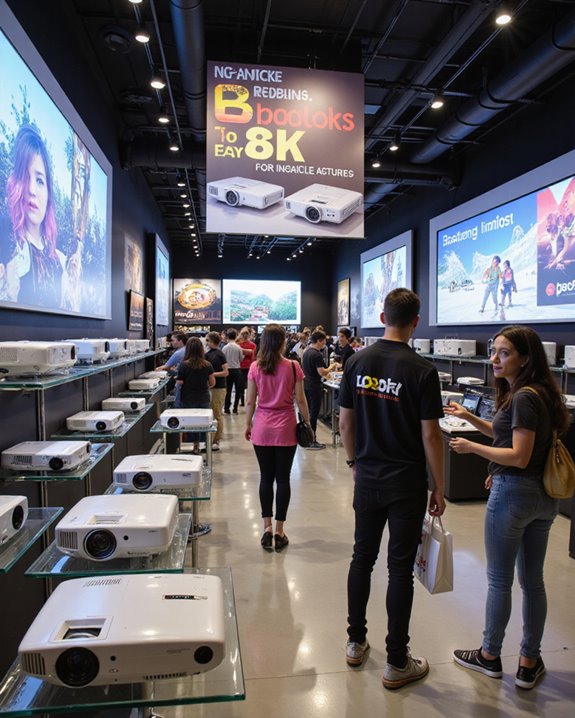
Yes, projectors can be 4K, which means they display native Ultra HD resolution at 3840 × 2160 pixels for very sharp images. These 4K projectors use display technologies such as DLP (Digital Light Processing), LCD (Liquid Crystal Display), or SXRD (Silicon X-tal Reflective Display). They may use either traditional lamps or lasers as a light source. Ultra HD projectors support high color accuracy, HDR (High Dynamic Range), and high frame rates for smooth motion—several options exist for different needs. Further details reveal key differences and ideal features.
Key Takeaways
- Yes, projectors can be true 4K, offering native Ultra HD resolution of 3840 × 2160 pixels for exceptionally sharp images.
- Some projectors use 4K-enhanced (pixel-shifting) technology to simulate 4K, but true 4K models provide superior clarity and accuracy.
- 4K projectors are available in various types, including home theater, business, ultra short throw (UST), laser, and portable models.
- Key features to look for include high brightness, HDR support, accurate color reproduction, and advanced connectivity options.
- Laser-based 4K projectors offer longer lifespan, lower maintenance, and improved performance over traditional lamp-based models.
What Defines a 4K Projector?
You may be interested

A 4K projector is defined primarily by its native resolution, which refers to the fixed number of pixels built into its imaging device. True 4K projectors deliver a native resolution of 3840 × 2160 pixels, meeting Ultra HD standards with about 8.3 million pixels on screen. This guarantees sharp images without digital enhancement. Models such as the Optoma UHZ65LV use advanced light sources—like laser or lamp—that affect both brightness and color accuracy. Brightness, measured in ANSI Lumens, ranges from 2200 to 7500, supporting visibility even in ambient light. Display technology, including DLP, LCD, or SXRD, determines how colors appear and how well the projector handles motion. HDR compatibility further enhances color accuracy, delivering images that reflect creators’ intentions. Additionally, the resolution and screen size compatibility are crucial factors to ensure the projected image remains sharp and detailed at large sizes.
Comparing True 4K and 4K-Enhanced Technologies
How do True 4K projectors differ from 4K-Enhanced technologies? The main distinction lies in resolution and visual quality. True 4K projectors, using DLP (Digital Light Processing), deliver a native resolution of 3840×2160 or higher, producing 8.3 million pixels for exceptional clarity on large screen sizes. In contrast, 4K-Enhanced projectors use pixel-shifting to simulate 4K, achieving only 4.1 million pixels. Additionally, True 4K projectors typically offer superior image quality and color accuracy, making them better suited for high-quality entertainment and gaming. The actuator in True 4K DLP projectors rapidly shifts pixels, ensuring smooth motion and high performance. While True 4K models typically cost more, they provide better future-proofing and a more immersive viewing experience, especially on bigger screens.
Major Types of 4K Projectors on the Market
True 4K resolution sets a high standard for image clarity, but not all projectors on the market use the same technology or serve the same purpose. The main types include:
- Home Theater Projectors: Models like Epson Pro Cinema 6050UB and BenQ HT3550 focus on cinematic experiences and require careful installation considerations, such as screen placement and ambient light control.
- Business and Education Projectors: High-brightness options like Epson Pro L1755UNL work well in large spaces and need regular maintenance tips, especially for filter and lens cleaning.
- Ultra Short Throw (UST) Projectors: UST models, such as some from Epson, create large images from short distances, ideal for tight spaces.
- Laser Projectors: NEC PX1004UL uses laser technology, offering lower maintenance and longer lifespan than traditional lamps.
- Portable Projectors: Compact, battery-powered units prioritize ease of setup and transport.
- Additionally, screen technology plays a crucial role in image quality and compatibility with various 4K projectors.
Recommended Products

[ Built-in Official Licensed Google TV ] - Without additional equipment, the smart projector can directly access Netflix, Prime Video, YouTube, Hulu, and other applications. It greatly reduces the complexity of operation and makes watching movies more convenient
![[Officially-Licensed App & Auto Focus]White Smart Mini Projector with WiFi and Bluetooth, XuanPad 4K Support Movie Projector, Portable Native 1080P Outdoor Projector with 360° Stand](https://m.media-amazon.com/images/I/51I8uy-U8bL._SL500_.jpg)
Exciting Moments Begin - The XuanPad mini projector compatible with Netflix for the ultimate viewing experience.No extra devices or complicated setup needed—just enjoy instant access to a vast library of movies with immersive, smart TV-like quality.XuanPad smart projectors are compatible with a variety of built-in apps like YouTube and Prime Video, and support for wireless screen mirroring and HDMI. Whether it's movie night, a gaming session, or camping, our licensed projectors can meet your customized entertainment needs.
![Smart Projector 4K [VIDAA Live TV & 36W Dolby & Voice Control] with WiFi6 and Bluetooth, Short Throw Projector Compatible with Netflix, AI Auto Focus, HDR10, Home Theater Proyector for Outdoor Movies](https://m.media-amazon.com/images/I/51LPK2IYH0L._SL500_.jpg)
[2026 Fastest VIDAA Smart OS: Faster, Smoother, More Reliable] TOPTRO A2 4K projector runs exclusive VIDAA Smart OS, blending smart-TV simplicity with a mature app ecosystem and broad streaming support. Built on years of smart TV development, it delivers a true TV-like experience with smooth, intuitive operation. Compared with standard Android or Google TV projectors, VIDAA offers faster navigation, greater stability, enhanced security, and more efficient resource management. No streaming stick needed. Access Netflix, YouTube, Prime Video, Disney+, Hulu, and massive live TV channels. Designed for long-term performance, VIDAA stays responsive while reducing ads, crashes, and complicated setup
Essential Features to Look for in 4K Projectors
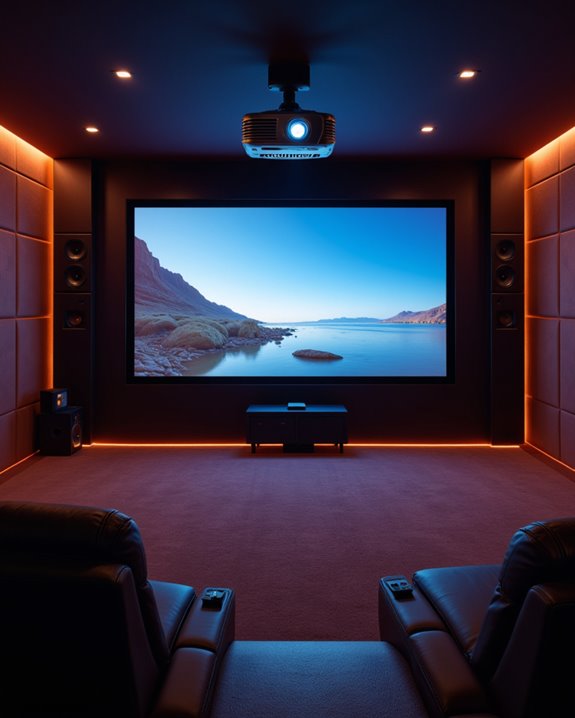
When choosing a 4K projector, several key features directly affect image quality, connectivity, and overall performance. True 4K resolution means 3840×2160 pixels, delivering crisp visuals. High contrast ratios, which show the difference between dark and light areas, and accurate color reproduction are essential for lifelike images. Brightness, measured in lumens, should be high enough for well-lit rooms. Connectivity options, such as HDMI, DisplayPort, USB, and audio ports, offer flexibility for different devices. Wireless connectivity, like Wi-Fi or Bluetooth, allows cable-free streaming. Screen calibration—adjusting settings for the best picture—ensures optimal results. Laser light sources last longer and use less power than lamps, lowering power consumption over time. Features like a built-in operating system and warranty increase convenience and reliability.
Recommended Products
See The Difference 4K UHD Makes
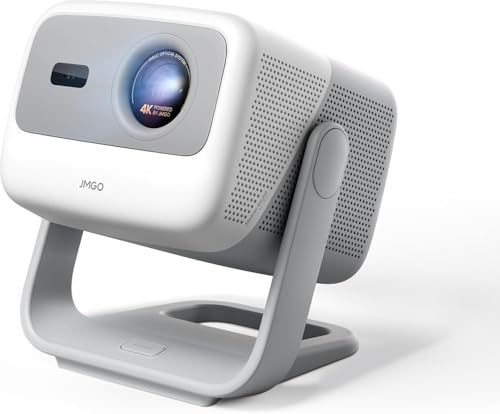
Experience 4K Cinematic Brilliance : JMGO N1S 4K Upgrade projector brings an immersive cinematic experience straight to your home. With 4K UHD resolution and HDR10, it delivers rich colors and high contrast for crisp, detailed visuals in every frame. Its 200 inch screen ensures a theater-grade experience without leaving home. 10W dual Dolby Audio speakers provide 360° surround sound, and Blu-ray 3D support offers unmatched realism when paired with active 3D glasses, creating a lifelike world.

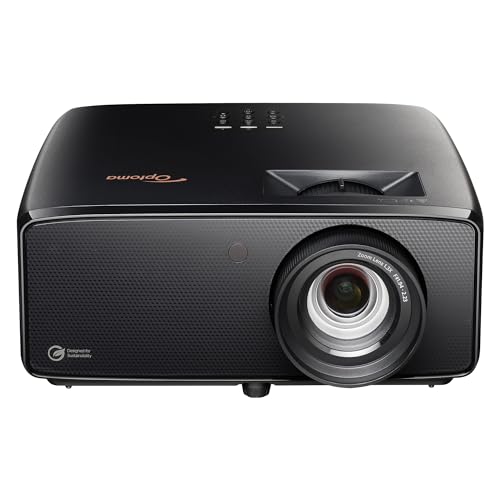
High Brightness FHD Laser Projector: Experience sharp visuals with native 1080p (1920x1080p) resolution and a 1.1-1.5 throw ratio; providing consistent clarity for professional-grade presentations and high-definition video content
Performance Factors: Resolution, HDR, and Frame Rates
Picture quality in 4K projectors depends heavily on three core factors: resolution, HDR, and frame rates. True 4K resolution means 3840 x 2160 pixels, or about 8.3 million pixels, providing sharp, detailed images. Some models use e-shifting to simulate 4K from 1080p sources. High Dynamic Range (HDR) boosts color accuracy and increases the dynamic range—the difference between the brightest whites and the darkest blacks. Common HDR formats include HDR10 and Dolby Vision, both enhancing visual depth. Color accuracy is further supported by 8 bits per channel or higher for richer colors.
Frame rates, measured in hertz (Hz), affect how smooth motion appears. Motion interpolation, a technology that creates additional frames, helps reduce blur in fast-moving scenes, especially for sports and gaming.
Understanding Connectivity and Setup Options
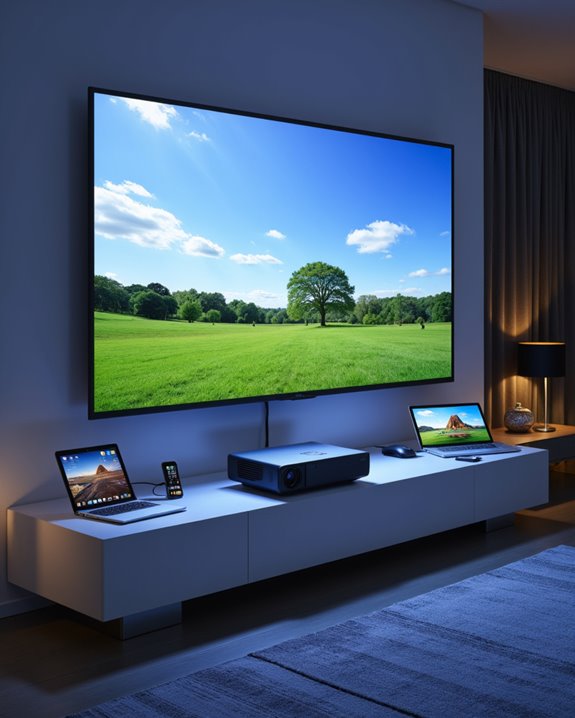
How do users connect modern devices and maximize setup with today’s 4K projectors? The most essential factor is HDMI compatibility, which guarantees easy connection to sources like Blu-ray players, game consoles, and laptops. HDMI (High-Definition Multimedia Interface) ports, especially HDMI 2.1, support features like 4K resolution at 120Hz and Variable Refresh Rate (VRR). Wireless connectivity, such as Wi-Fi and Bluetooth, allows screen mirroring and content sharing without cables, reducing clutter.
For ideal setup:
- Secure HDMI cables to prevent signal loss.
- Adjust projector settings for best picture and audio quality.
- Check device compatibility to avoid connection issues.
- Position the projector to minimize glare and maximize image size.
- Use audio output ports or HDMI eARC (Enhanced Audio Return Channel) for connecting soundbars or external speakers, improving sound quality.
Recommended Products

[Official Google TV 14.0 & Gemini AI - All-in-One Projector for Movies, Sports & Live TV] Enjoy a seamlessly smart TV interface powered by the latest Google TV 14.0 system and MT9660 processor with 2+32GB storage for smooth performance. Stream Netflix, YouTube, Prime Video, Disney+, Hulu, Peacock, ESPN, Fox Sports and more—no TV stick required. With Google Gemini AI personalized recommendations, Google Voice Control, and 800+ live TV channels, it works as a true integrated entertainment center for all your viewing needs.

Superior Display, Swift Connectivity: Elevate your viewing experience to unparalleled clarity with 8K@60Hz, and enjoy smoother visuals and reduced lag with support for 4K@120Hz and 4K@60Hz.

Top Technology----8K@60HZ: This 8K Ultra High Speed HDMI Cable uses the most cutting-edge technology, is compatible with 8K@60HZ and 4K@120HZ, clearly displays every particle, and accurately processes every signal source.
Popular Brands and Models in the 4K Projector Space
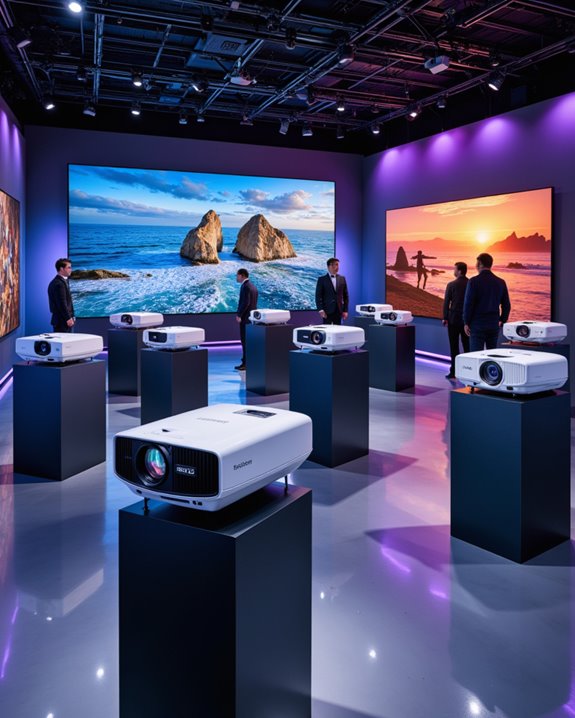
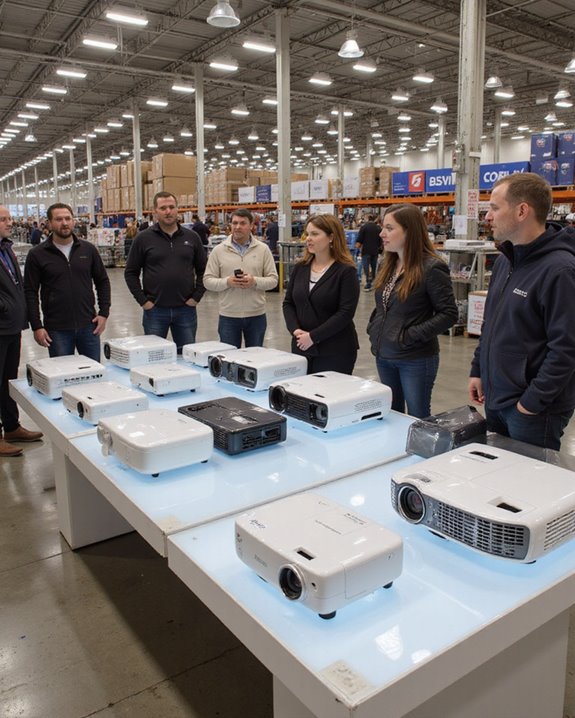
A broad range of 4K projectors is available today, with several brands and models leading the market regarding technology, design, and performance. Top brands include Epson, BenQ, Sony, JVC, LG, Hisense, and NEC. Each offers unique features:
- Epson Pro Cinema models use pixel shifting, a method that increases visible resolution.
- Sony VPL-XW5000ES and NEC PX1004UL employ laser technology for high brightness.
- Hisense L9Q and Formovie Theater use ultra short throw design, reducing installation challenges by allowing placement close to the wall.
- LG CineBeam Q stands out for portability.
Most 4K projectors support HDR for improved visuals. Maintenance requirements vary; for example, laser projectors generally require less frequent lamp changes than traditional lamp-based models.
Recommended Products

Premium 4K UHD Laser Projector: Experience high-fidelity 4K UHD (3840x2160p) resolution powered by 5,500 ANSI lumens; providing incredible brightness and clarity for large-scale home theaters and expansive entertainment venues

Powered by RGB Triple Laser: The X-Master RGB triple laser engine delivers 3200 ISO lumens and a 100,000:1 contrast ratio for vivid, accurate colors and exceptional image depth—perfect for immersive viewing anytime.

Immersive 4K UHD Home Theater Projector: Elevate your entertainment with 4K UHD (3840x2160p) resolution and 4,000 ANSI lumens; delivering cinematic clarity and vibrant visuals perfect for high-end home theaters or living rooms with ambient lighting
Price Ranges and Choosing the Right 4K Projector
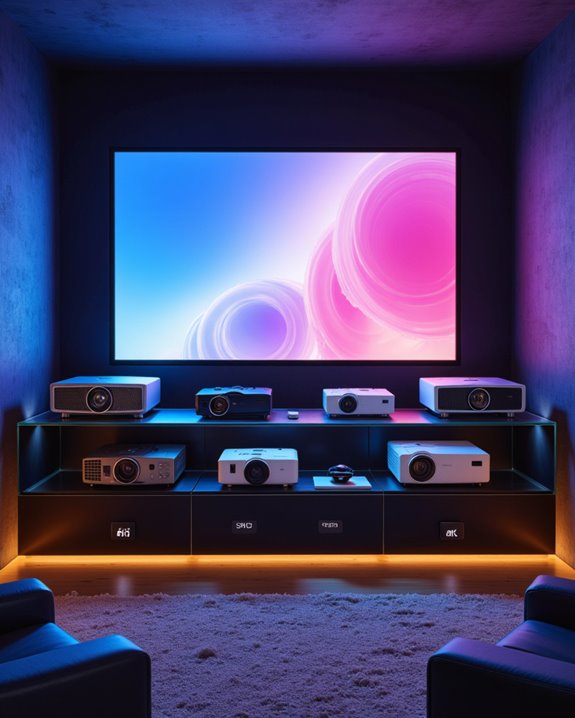
Selecting a 4K projector often begins with understanding the typical price ranges and what each level offers. Entry-level 4K projectors start near $1,000, but true native 4K models, which use chips with 3840 x 2160 pixels, generally cost $3,000 or more. Projectors under $1,000 are usually 1080p, sometimes simulating 4K using pixel-shifting technology. Mid-range options ($1,000–$3,000) balance image quality and price, while high-end models ($3,000–$15,000+) deliver top performance, often using laser light engines. Laser projectors have higher upfront costs but lower maintenance costs and reduced environmental impact due to longer lifespan. Key factors influencing price include brightness (measured in ANSI lumens), contrast, HDR support, and smart features. Choosing the right model depends on budget, usage needs, and total ownership costs.
Recommended Products

【Google TV Entertainment Hub: Your All-in-One Streaming Center】 Enjoy instant access to vast streaming content with zero setup—the ideal partner for portable projection. The VOPLLS G3 smart system, powered by Google's latest chip and rigorously certified, ensures smooth performance and lifelong updates for a cutting-edge home theater. Move beyond basic 'compatible with Netflix' projectors. Our device is fully compatible with top platforms including Netflix, Disney+, Prime Video, and Hulu, with no extra devices required. The built-in Google Play Store provides 10,000+ apps and 800+ free live channels, instantly turning any space into your premium outdoor cinema.
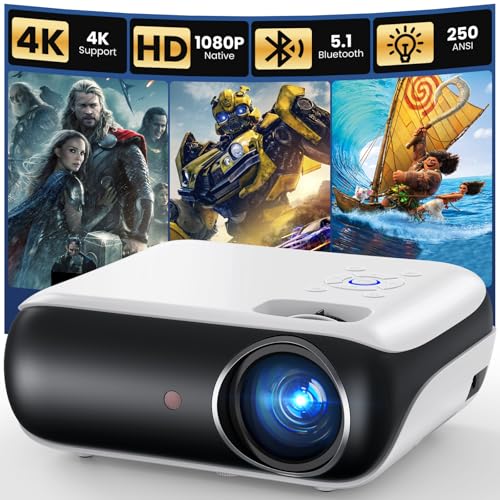
[ Native 1080P Full HD Resolution ] - Enjoy crystal-clear visuals with HAPPRUN H1's native 1920x1080 resolution, delivering sharper, brighter, and more vibrant images for an immersive viewing experience. This 1080p projector is perfect for creating a stunning home theater or bedroom projector setup

Ultra-Bright 4K Visuals: Experience stunning 4K laser projection up to 200” with 2450 ISO lumens and ALPD (Advanced Laser Phosphor Display) technology. ALPD delivers exceptional brightness and color accuracy, ensuring clear, vivid visuals even in daylight. It also eliminates the speckle effect common in traditional laser projectors, providing a smoother, more consistent image for an immersive viewing experience.
Frequently Asked Questions
Can 4K Projectors Be Used Outdoors for Movie Nights?
Under a starlit sky, 4K projectors transform backyards into cinematic escapes, but outdoor durability and ambient light considerations are vital. High-lumen models, weather-resistant builds, and strategic placement ensure crisp visuals and reliable performance for outdoor movie nights.
Do 4K Projectors Require Special 4K Screens for Best Results?
For best results, 4K projectors benefit from special screens optimized for high resolution and proper screen calibration, minimizing resolution scaling issues. Such screens enhance contrast, color accuracy, and sharpness, ensuring viewers experience the projector’s full potential.
How Long Do 4K Projector Bulbs and Lasers Typically Last?
Bulb lifespan in 4K projectors typically ranges from 2,000 to 5,000 hours, depending on usage and settings. Laser durability, by comparison, offers considerably longer performance, often lasting 20,000 to 30,000 hours with minimal maintenance required.
Are 4K Projectors Suitable for Gaming and Low Input Lag?
The current question examines whether 4K projectors are suitable for gaming and low input lag. Many 4K projectors now deliver excellent gaming latency and image quality, offering low input lag and advanced display technologies for responsive, immersive gameplay.
Can Streaming Apps Be Installed Directly on 4K Projectors?
Over 60% of new home projectors offer Smart TV integration, enabling direct installation of streaming apps. Streaming app compatibility varies by model, but many 4K projectors with Android OS support Netflix, Disney+, and other popular platforms seamlessly.