As an Amazon Associate, we earn from qualifying purchases. Some links on this site are affiliate links at no extra cost to you. Our recommendations are based on thorough research and editorial judgment.

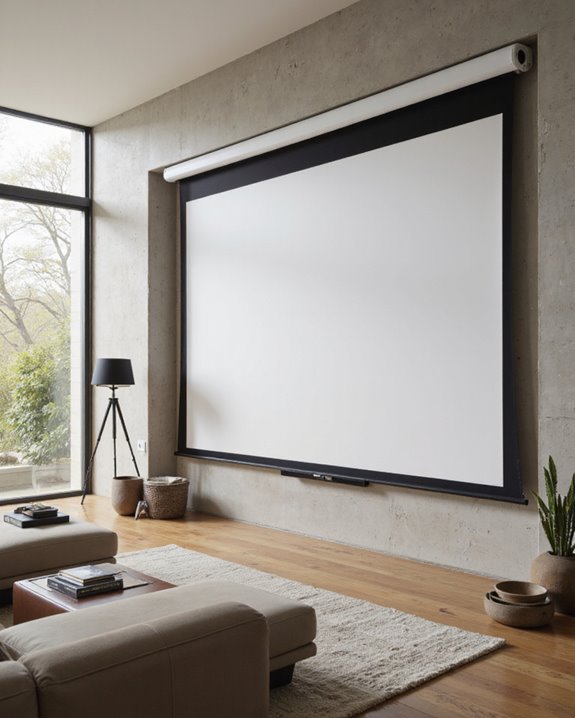
What Is an ALR Projector Screen?

An ALR (Ambient Light Rejecting) projector screen is a specialized display surface designed to block unwanted light from windows or lamps, using advanced textures and materials like microstructures, high-gain coatings, or gray finishes. These screens direct projector light toward viewers for clear, bright images even in well-lit rooms, minimizing glare and enhancing contrast. Compared to standard screens, ALR models support formats like 4K/8K and offer wide viewing angles. Further exploration will reveal more about types and setup options.
Key Takeaways
- An ALR (Ambient Light Rejecting) projector screen is designed to maintain image quality in rooms with significant ambient light.
- It uses specialized surface materials and optical technology to reflect projector light toward viewers while absorbing or diverting stray ambient light.
- ALR screens enhance image brightness, contrast, and clarity by blocking up to 95% of unwanted ambient light from various directions.
- They come in various styles and materials, suitable for home theaters, commercial spaces, and well-lit environments.
- ALR screens are especially effective with both standard and ultra-short throw projectors, outperforming traditional matte white screens in bright rooms.
Defining ALR Projector Screens
You may be interested
How do projector screens maintain image quality in bright rooms? Ambient Light Rejecting (ALR) projector screens are designed for this exact purpose. These screens use specialized materials with high material durability and unique aesthetic design to minimize glare and enhance contrast, even when multiple light sources like lamps or windows are present. ALR screens work by absorbing or diverting ambient light away from the viewer’s line of sight, resulting in brighter and bolder images. Additionally, high luminosity and contrast are key features that improve viewing clarity in well-lit environments.
How ALR Screens Work
In brightly lit rooms, ALR (Ambient Light Rejecting) screens use advanced optical technology to maintain clear and vibrant images where standard screens often fail. These screens feature specially engineered surfaces—such as microstructures, multi-layered filters, or embedded lenses—that manipulate light direction. By reflecting projector light directly toward viewers and absorbing or scattering ambient lighting from other angles, ALR screens prevent images from becoming washed out.
Proper screen selection is crucial for maximizing performance, especially in environments with challenging lighting conditions.
Key mechanics include:
- Directional light control: Screens are designed to reject light from above or the sides (typical sources of ambient lighting).
- Surface designs: Lenticular, Fresnel, or black-grid patterns enhance light rejection.
- Projector compatibility: Performance depends on the alignment between screen and projector type, like ultra-short throw or long throw models.
This approach ensures higher contrast and clarity, even in challenging lighting conditions.
Key Features and Technologies
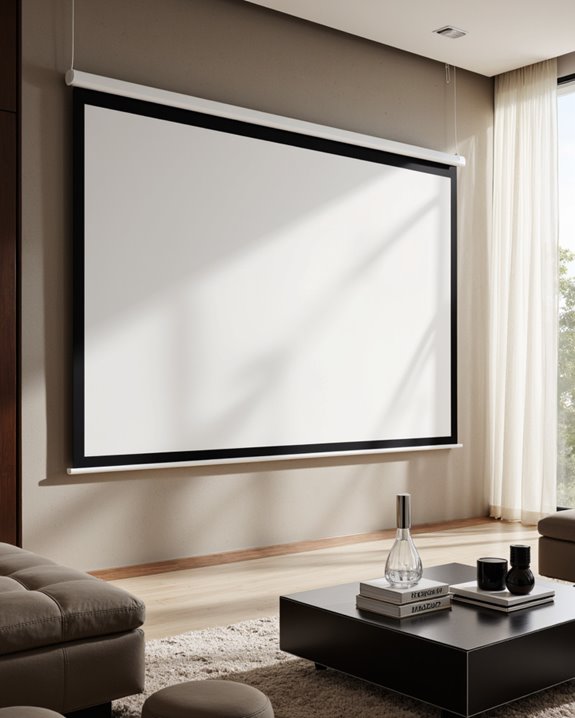
What sets ALR (Ambient Light Rejecting) projector screens apart is their ability to deliver vivid, high-contrast images even in rooms with significant ambient light, outperforming standard projection screens in challenging environments. Their core feature is Ambient Lighting rejection, blocking up to 95% of stray light for major Visual Enhancement. Key technologies include:
- Lenticular surfaces, which use specially shaped layers to absorb and reflect light selectively
- Micro-serriform patterns that boost light rejection
- TPU HBSP, a high-contrast material with strong gain
These screens support Ultra Short Throw (UST) projectors, 4K/8K Ultra High Definition (UHD), and 3D formats. Other features include wide 170° viewing angles, tensioned wrinkle-free fabric, slim aluminum frames, and ISF-certified materials for accurate color and contrast. Installation is straightforward, with customizable height and user guides. Additionally, ALR screens often incorporate specialized surface textures designed to optimize light rejection and image clarity in varied lighting conditions.
Recommended Products

Cutting-Edge Screen Technology: Our UST ALR projection screen boasts a precision micro-toothed 3D structure and triangular grating, with one side black and the other white.Compared to traditional ALR projection screens, it is custom-designed for ultra-short-throw projectors, effectively absorbing ambient light from above while directing the projector's light towards the audience. This design ensures optimal image quality with minimal light interference.

CONVENIENT TO STORAGE AND CARRY : Compact one-piece,lightweight and folding design. You can fold the projector screen in small size and put it in your backpack or suitcase
Types of ALR Screens
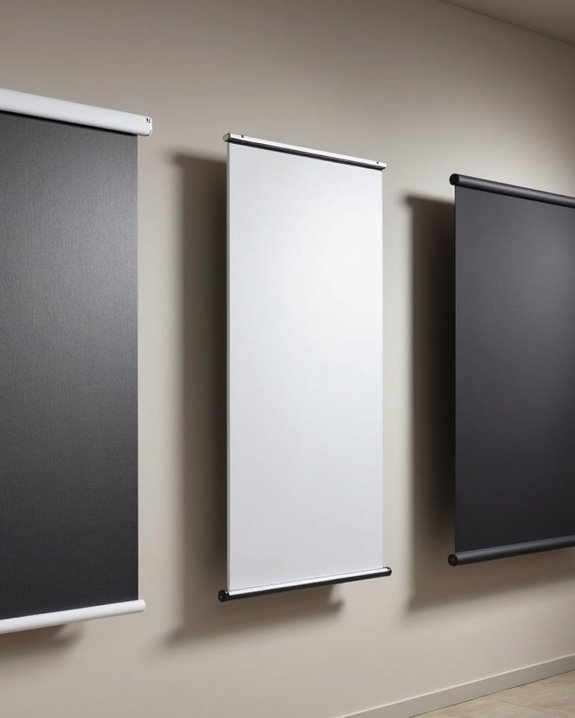
A wide range of ALR (Ambient Light Rejecting) projector screens is available, each designed to meet specific viewing environments and user needs. ALR screens differ by mounting styles, such as fixed frame (permanently mounted for stability), motorized (rolls up automatically), retractable (manual pull-down), and ceiling-mounted (installed overhead for larger rooms). Deployment options include manual, electric, remote-controlled, or smart screens, which offer varying degrees of convenience. Material options play a pivotal role in performance:
- Cinegrey 3D for high brightness,
- Matte white with ALR coatings for basic light rejection,
- Gray for glare reduction,
- Silver-finish for vivid images,
- Black for high contrast.
There are also portable, inflatable, popup, and fixed place ALR screens, ensuring suitability for home, commercial, or outdoor settings.
Recommended Products

ALR Projector Screen, 1.5 Gain, 100% Non-Transparent: ALR projector screen with stand can reject over 90% of ambient light while offering 1.5 gain. Even in bright daylight, it delivers vibrant and HD images. Most ordinary screens appear faded and blurry during the day. Black backing projector screen can effectively prevent light transmission and reflection, providing better visual effects.

Movie Screen Fabric: Made from white, soft-touch material, our thickened, smooth projector screen is crease-free and nontransparent, delivering brighter colors. It uses washable materials and can be washed either by hand or in a washing machine. Quality is strictly controlled, making it ideal for outdoor projector use.
Comparing ALR and CLR Screens
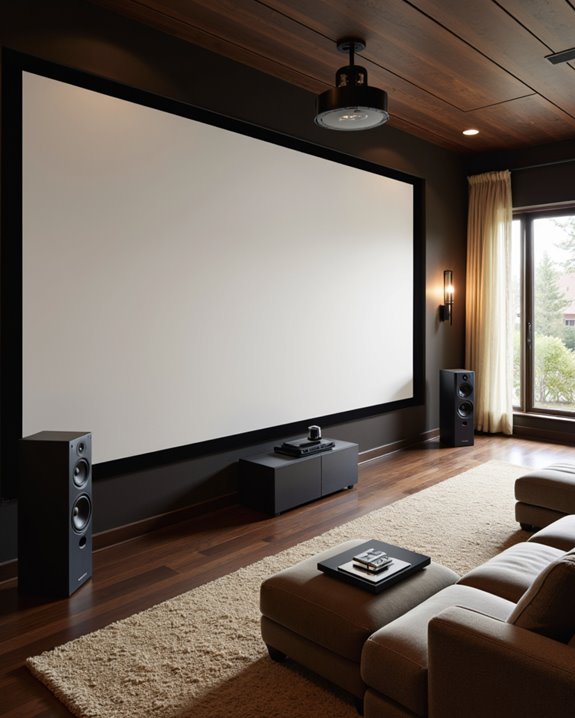
Choosing between ALR (Ambient Light Rejecting) and CLR (Ceiling Light Rejecting) projector screens depends on the type and direction of ambient light present in the viewing environment. ALR screens use specialized screen materials with reflective coatings and microstructures to redirect ambient light from the sides or front, improving image quality in rooms with various light sources. CLR screens, designed specifically for overhead or ceiling light, absorb up to 95% of top-down illumination, making them ideal for spaces where ceiling lights dominate. Key differences include:
- ALR screens handle multiple ambient light directions, offering greater adaptability.
- CLR screens target ceiling light, enhancing black levels and color accuracy under direct overhead lighting.
- ALR materials suit traditional projector placements, while CLR excels with UST projectors and ceiling lights.
Recommended Products

★ 【A perfectly flat screen 】Thanks to the upgraded tab-tensioned system, this screen works well with all projectors, including the most demanding UST projectors.
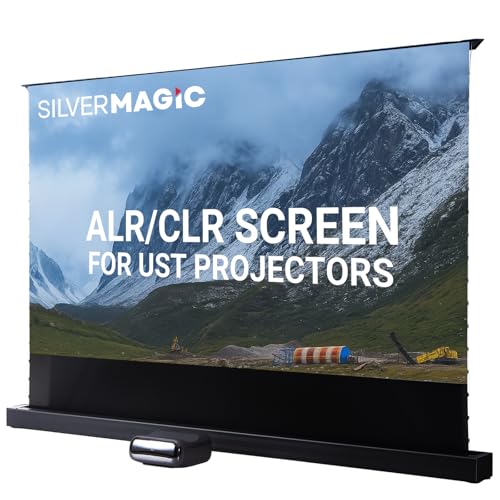
★【95% ALR】The precision-engineered optical surface’s micro-structure rejects up to 95% of ambient light, preserving vivid colors, deep contrast, and sharp detail even in bright environments. Designed for Ultra HD and HD projectors, this screen delivers a truly elevated home theater experience.

Unshakably Stable Base and Support: This projection screen features a sturdy base and support—extended and reinforced—effectively addressing instability issues common in screen stands. Crafted from premium steel, the accessories of projector screen ensures long-term durability and resistance to bending or breaking
Installation and Setup Considerations
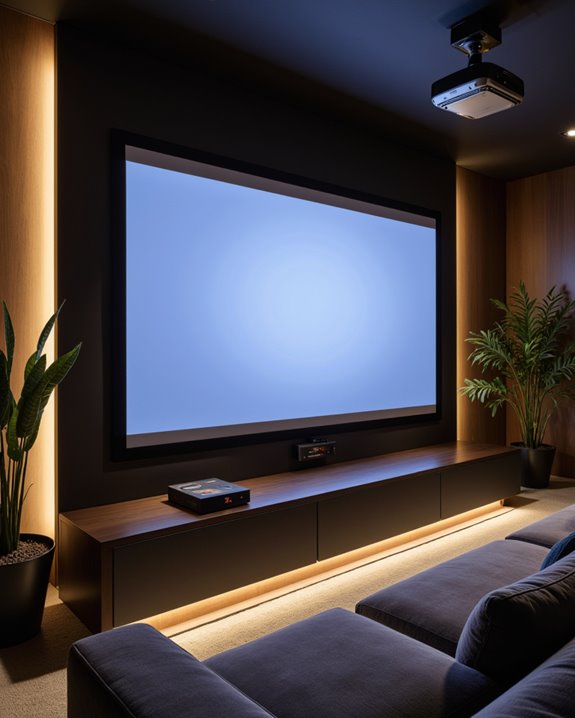
Proper installation and setup are essential for achieving the best performance from an ALR (Ambient Light Rejecting) projector screen, which is a screen designed to reduce the impact of ambient light and improve image clarity. The mounting height should be carefully measured so that the screen aligns with viewers’ eye level for ideal visibility. Use a stud finder to secure mounting brackets to wall studs, ensuring safety and stability. Clean the installation area and wear gloves to prevent stains or scratches on the screen. Cable management—organizing and concealing projector or power cables—maintains a clean, professional look and reduces tripping hazards. Double-check that the screen is level and that the projector aligns properly. Test the setup in different lighting conditions to confirm correct ALR performance.
Recommended Products
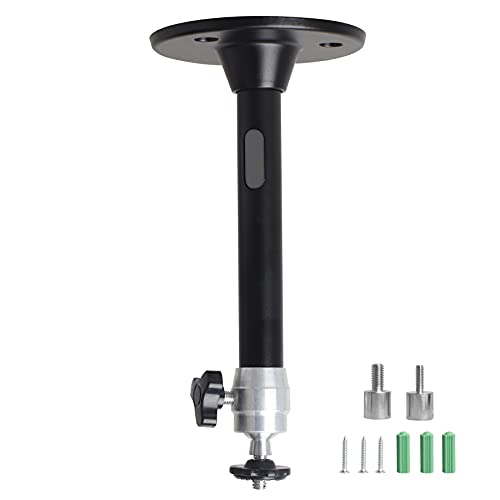
Projector Holder Compatible with QKK,DR.J,DBPOWER,Anker,VANKYO,AAXA,Jinhoo,PVO,TMY,AuKing and Most Other Mini Projector

IMPORTANT: The VIVOHOME manual projector screen provides a 100-inch diagonal display area (87W×49H in, 16:9) for the best viewing experience at 9.2 ft; Its overall size is 92 × 59 in, so please ensure your room allows enough space for easy installation

IMPORTANT: The manual projector screen provides a 72" diagonal display area (63W×35.4H in, 16:9) for the best viewing experience at around 6.6 ft; Its overall size is 65.4 × 41.3 in, so please ensure your room allows enough space for easy installation
Practical Applications and Benefits
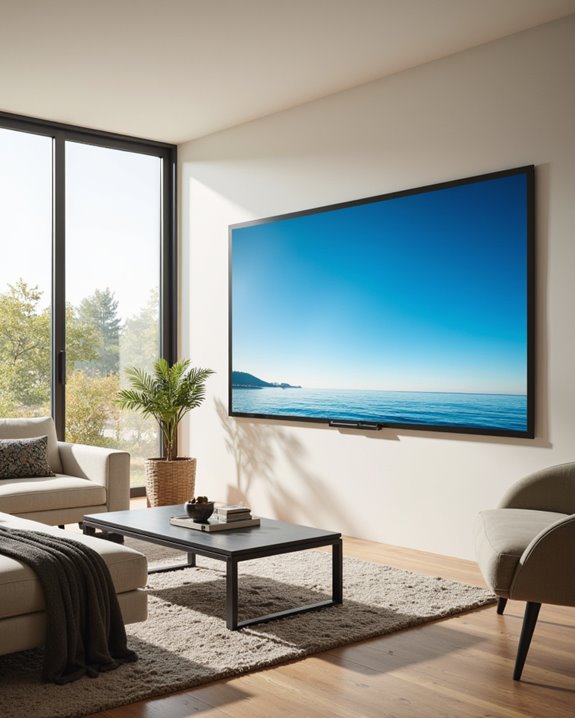
Once installation is complete, ALR (Ambient Light Rejecting) projector screens provide significant advantages in real-world settings. These screens use specialized materials to reflect projected images directly toward viewers while absorbing unwanted ambient light—any light in the room that is not from the projector. This selective reflection boosts image contrast and sharpness, even in bright rooms. Improved color calibration, which means adjusting a display to show colors accurately, is another benefit, resulting in more lifelike images. Major advantages include:
- Clear, crisp visuals in environments like classrooms, conference rooms, or home theaters
- Reduced eye strain, as viewers do not need to adjust to fluctuating lighting
- Compatibility with high-resolution content, such as 4K videos
- Cost-effectiveness in areas with unavoidable ambient light
ALR screens are well-suited for varied projector types and future video standards.
Choosing the Right ALR Screen for Your Space
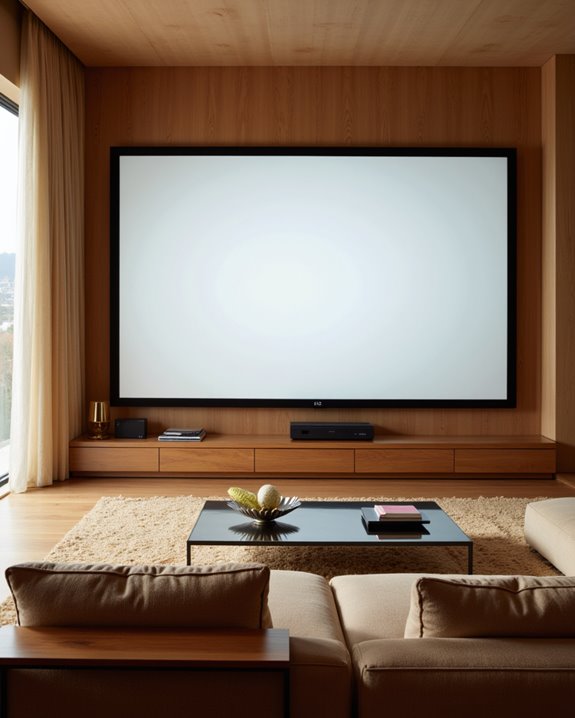
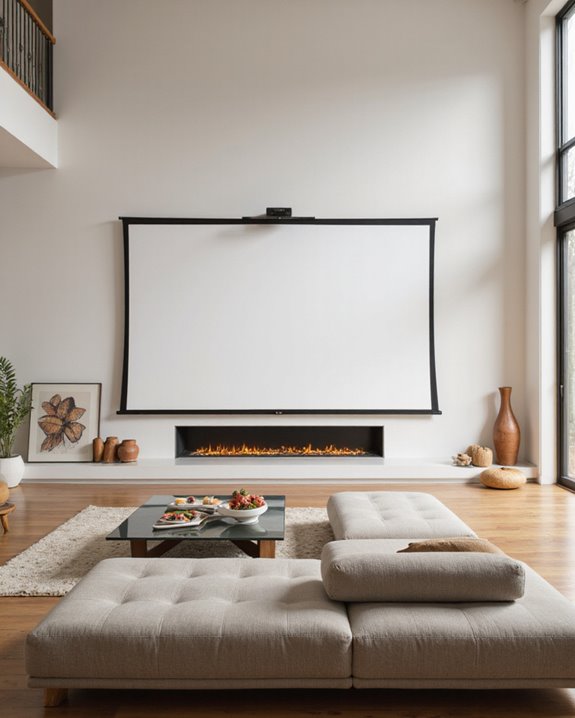
How does one select the best ALR (Ambient Light Rejecting) screen for a specific space? The process begins by evaluating the room’s lighting, size, and intended use. Fixed frame screens, which are permanently mounted, offer superior screen durability and color accuracy, making them ideal for home theaters. Motorized screens retract when not in use, adding convenience for multi-purpose rooms. Ultra-short throw (UST) ALR screens are designed for projectors placed close to the screen—best for small spaces—while standard ALR screens suit larger rooms. Material choice impacts both performance and maintenance:
- Vinyl screens provide easy cleaning and long-term durability.
- Fabric screens often enhance color accuracy.
- Micro-structured and coated surfaces improve viewing in bright environments.
Screen size, aspect ratio, and projector placement must also match the room’s layout.
Recommended Products

Professional-Grade ALR Technology: Features advanced Ambient Light Rejecting (ALR) screen surface, specifically designed to combat ambient room light. Enjoy bright, high-contrast images with vibrant colors even in well-lit environments, perfect for living rooms or conference rooms.

【85% Ambient Light Rejection】Engineered for bright rooms, this screen uses advanced PET Crystal technology to reject up to 85% of ambient light. Enjoy glare-free, high-contrast images even in daylight.

Cutting-Edge Screen Technology: Our UST ALR projection screen boasts a precision micro-toothed 3D structure and triangular grating, with one side black and the other white.Compared to traditional ALR projection screens, it is custom-designed for ultra-short-throw projectors, effectively absorbing ambient light from above while directing the projector's light towards the audience. This design ensures optimal image quality with minimal light interference.
Frequently Asked Questions
How Do I Clean and Maintain an ALR Projector Screen?
Cleaning techniques for ALR projector screens involve using lint-free cloths and mild soap, avoiding harsh chemicals. Maintenance tips include regular inspection, proper storage, gentle handling, and ensuring air circulation to prevent moisture buildup and prolong screen lifespan.
Are ALR Screens Compatible With Ultra-Short Throw Projectors?
Compatibility between ALR screens and ultra-short throw projectors depends on proper projection angle and ambient lighting control. When positioned correctly, ALR screens can enhance image quality, but incorrect alignment may reduce effectiveness, especially in environments with significant ambient lighting.
Can ALR Screens Be Used Outdoors?
Outdoor use of ALR screens is limited due to reduced effectiveness under uncontrolled ambient light. Outdoor durability and weather resistance are concerns, as exposure to moisture, dust, and UV rays can degrade screen performance and surface properties over time.
Do ALR Screens Impact 3D or Gaming Performance?
The current question addresses whether ALR screens affect 3D compatibility and gaming performance. ALR screens enhance 3D compatibility by preserving contrast and color, and support gaming performance by reducing glare and maintaining image quality in ambient light conditions.
What Is the Typical Lifespan of an ALR Projector Screen?
Much like a well-tended garden, the typical lifespan of an ALR projector screen flourishes between 5 to 10 years. Material durability and careful maintenance tips—avoiding sharp objects, gentle cleaning—ensure its vibrant performance endures through seasons.