As an Amazon Associate, we earn from qualifying purchases. Some links on this site are affiliate links at no extra cost to you. Our recommendations are based on thorough research and editorial judgment.

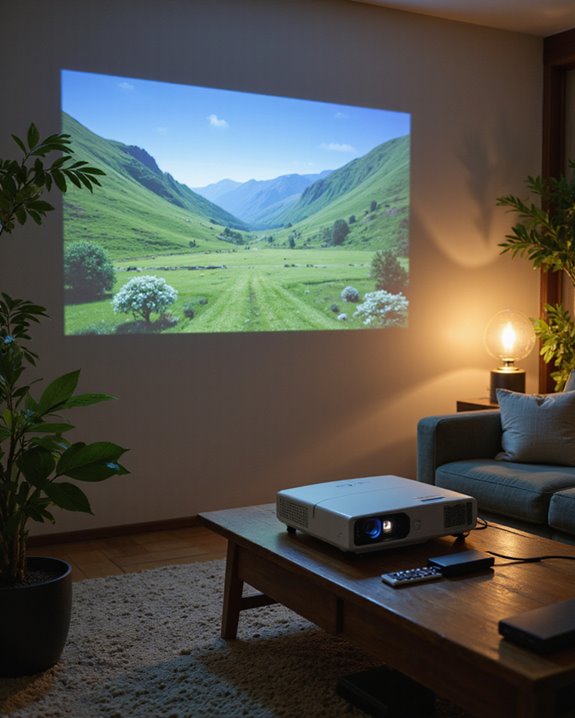
What Are the Advantages and Disadvantages of a Projector?

Projectors offer large, cost-effective displays—often over 100 inches—making them ideal for home theaters, classrooms, and offices. They allow flexible setup, portability, and adjustable image sizes. Benefits include immersive visuals, reduced eye strain (less blue light and glare), and wide viewing angles. Limitations involve lower brightness in lit rooms, frequent maintenance, and basic built-in audio. Picture clarity depends on screen material and room lighting. For detailed comparisons, performance tips, and best use cases, more specifics are available below.
Key Takeaways
- Projectors offer large, cinema-like images at a lower cost per inch compared to TVs, making them ideal for big-screen experiences.
- Portability and flexible placement options allow projectors to adapt to various spaces and applications, from home theaters to business presentations.
- Advanced models provide high resolution, HDR, and wide viewing angles for immersive visuals but require appropriate lighting conditions for optimal performance.
- Built-in speakers often have limited sound quality, and regular maintenance is needed to prevent dust buildup and overheating.
- Projectors emit less blue light and reduce glare, supporting healthier and more comfortable long-term viewing compared to traditional monitors.
Cost-Effectiveness and Value
You may be interested
When considering the cost-effectiveness and value of projectors, the most significant factors are purchase price, operational costs, and the size of the image provided. Projector prices range widely, from under $100 for basic models to over $12,000 for advanced units. Pricing strategies reflect differences in features and performance. Technological advancements, such as laser and LED light sources, have improved energy efficiency and reduced maintenance costs. Operational expenses include energy consumption—ranging from 50 to 800 watts—and periodic bulb replacement, which can be costly. Key value points include:
- Projectors offer large screen sizes at a lower price per inch than TVs.
- Higher-end models provide superior image quality, justifying higher investment.
- The competitive market allows consumers to find projectors matching specific needs and budgets.
In addition, lamp life and replacement costs directly impact long-term value, as frequent use may require more frequent bulb changes and higher annual expenses. Considering ambient light performance is also crucial, as some projectors handle lighting conditions better, increasing their suitability and overall value.
Recommended Products

OFFICIALLY LICENSED DISNEY PRINCESS NIGHT LIGHT PROJECTOR — Projects a bright 3ft. Disney Princess image onto walls, floors or ceilings while delivering a soft night light for safe navigation in the dark

OFFICIALLY LICENSED MINNIE MOUSE NIGHT LIGHT PROJECTOR — Projects a bright 3ft. Minnie Mouse image on walls, floors or ceilings while delivering a soft night light for safe navigation in the dark

Unrivaled Clarity & Detail: Experience the cosmos in stunning detail. Our star projector galaxy light with industrial-grade 2-million-pixel lens projects incredibly sharp images. The 5K ultra-HD discs, meticulously etched with advanced photolithography, bring a vibrant and clear starry night right into your room for a truly immersive stargazing experience.
Flexibility and Portability Benefits
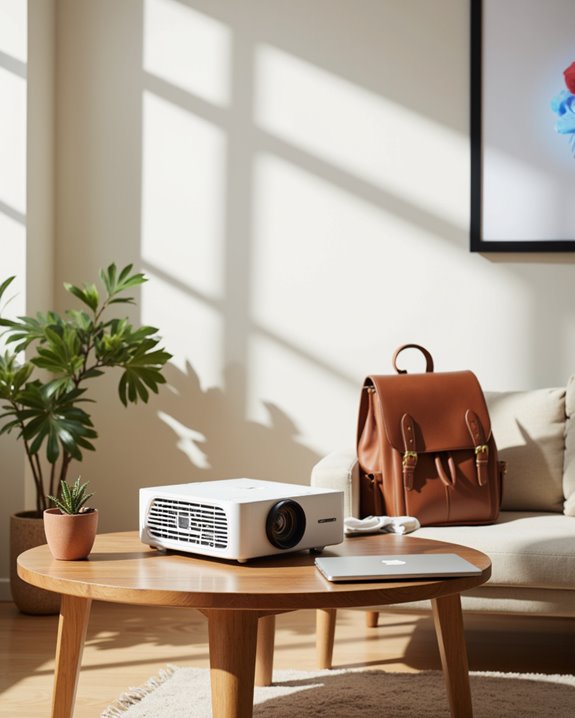
In addition to offering strong value for their image size, projectors stand out for their flexibility and portability. Portable projectors are lightweight—often between 2 and 5 pounds—making them easy to transport between locations such as homes, offices, classrooms, or outdoors. This mobility advantage is further enhanced by compact designs that fit into backpacks or briefcases, and many models include durable cases for travel. Quick setup features, such as plug-and-play operation and intuitive menus, allow users to start presentations or entertainment sessions rapidly. Remote connectivity options, including Wi-Fi and Bluetooth, reduce cable clutter and support connections with laptops, smartphones, or gaming consoles. These projectors adapt to a variety of spaces and needs, delivering large displays without requiring a permanent installation or dedicated room. Additionally, projectors provide flexible placement options such as ceiling mounting or shelf placement, which help them blend seamlessly into different environments and maximize usable space. The ability to easily adjust image size and focus further enhances their adaptability for different settings and audience sizes.
Recommended Products

【The Latest WIFI 6 Technology And Bluetooth 5.3】This projector with Wi-Fi and Bluetooth is equipped with the latest Wi-Fi 6 technology, compatible with Wi-Fi 6, 5G and 2.4G, offering faster connection speed and stronger stability, eliminating buffering and disconnection issues, and ensuring smoother online content playback. Additionally, it is fitted with the latest Bluetooth 5.3 chip, allowing for easy connection to Bluetooth speakers, headphones or other Bluetooth audio devices, providing a more efficient and stable transmission channel, and enabling users to enjoy higher audio quality with ease

【Built-in WiFi & Bluetooth Projector with Apps】Dual-band WiFi 2.4G + 5G ensures fast and stable wireless streaming. Bluetooth 5.2 supports speakers and headphones. Built-in apps like YouTube and Prime Video are supported, and the projector is compatible with TV sticks (not included) to access a wide range of streaming content and enjoy massive video libraries, making it a perfect movie projector.
![[Built-in Apps] Mini Projector with WiFi and Bluetooth & Android 12, Electric Focus 1080P Mini Portable Projector, Compatible with HDMI/Smartphone/USB for Movie/Gaming](https://m.media-amazon.com/images/I/51fGmnvk0+L._SL500_.jpg)
【Built-In Smart Apps & Smooth Operation】Please Attention: Bluetooth function supports audio transmission only, not video!! Enjoy endless entertainment with our small projector with WiFi. The upgraded system comes with popular apps pre-installed for instant movies and shows. No extra devices are needed.The intuitive interface makes it easy for everyone to use right out of the box
Immersive Viewing Experience
How does a projector create a truly immersive viewing experience? Projectors can display images larger than 100 inches diagonally, offering a sense of presence similar to commercial cinemas. This large image size draws viewers into the action, enhancing satisfaction. Modern projectors deliver high image resolution—meaning more detail and clarity in every frame. High color accuracy ensures that colors appear vivid and true to life, increasing realism.
Other immersive benefits include:
- Wide viewing angles, so everyone sees clearly.
- The ability to pair with high-fidelity sound for a complete audio-visual experience.
- Versatility for transforming spaces into immersive environments, such as classrooms or art installations.
Thanks to projection mapping, projectors can turn ordinary surfaces into dynamic, interactive displays that captivate audiences in ways traditional screens cannot.
Compared to televisions, projectors provide a broader, more engaging view and adapt well to various venues, making them ideal for movie nights, sports events, and interactive experiences.
Customization and Screen Options
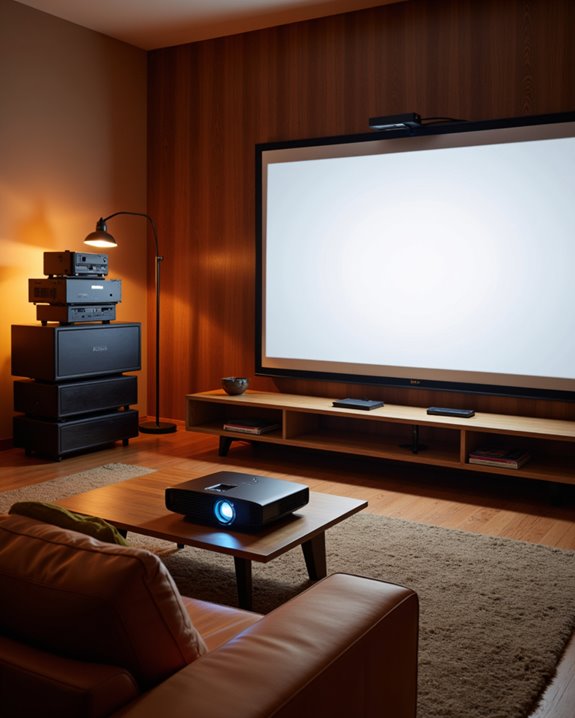
Projectors offer significant customization and screen options, allowing users to tailor their viewing experience to fit different spaces, content types, and budgets. The flexibility in screen size means users can select screens that match their room dimensions and viewing preferences. Projector screens come in various aspect ratios—such as 4:3 for presentations, 16:9 for movies, and 2.35:1 for cinematic content. Screen material options include matte white, gray, and advanced ambient light rejecting (ALR) surfaces, each designed to optimize image quality under specific lighting conditions. Popular screen types include:
- Fixed frame (permanently mounted, tensioned)
- Retractable (rolls up when not in use)
- Tripod (portable options)
Additionally, projection can be done directly on a wall if a dedicated screen is unavailable, though this may affect image quality depending on the wall’s color and texture. However, installation challenges arise with complex setups, such as fixed frames needing precise wall space. Customization may also increase cost, technical demands, and compatibility concerns.
Recommended Products

[PRODUCT PARAMETERS]--Screen Material: PVC; Frame Material: Aluminum Alloy + Velvet; Screen Resolution: 16:9; Diagonal Size: 110"

【130" DIAGONAL SCREEN】-- Framed Size: 118x68.5", Practical 113.3x63.7" Sized Viewing Area. 16:9 Hd Display, Actual 1.2 Gains, With Real 160° Viewing Angle, Providing Cool Watching Experience

Viewing Area Size: 104.5X58.9"; Viewing Angle: 120°; Display: 16:9 HD
Health and Eye Comfort Considerations
Eye comfort stands as a major consideration when choosing display technology for home or professional use. Projectors generally emit less blue light than standard monitors, reducing digital eye strain and the risk of eye fatigue—defined as tiredness or discomfort after prolonged use. Because projectors create larger images, viewers experience less screen glare, which is the reflection or bright spots on a display that can cause eye discomfort. Wider viewing angles also mean users do not need to focus on a small, bright area, further easing strain. Projectors can also mitigate the effects of blue light exposure, which is especially important for those who spend extended hours in front of screens. Additionally, modern projector technologies often incorporate features such as flicker reduction and adjustable brightness to enhance eye comfort. However, excessive brightness or sitting too close may increase the likelihood of eye fatigue. To maximize comfort:
- Adjust brightness settings
- Maintain a proper viewing distance
- Take regular breaks
Following these steps helps ensure healthier, more comfortable viewing experiences.
Limitations in Brightness and Ambient Light
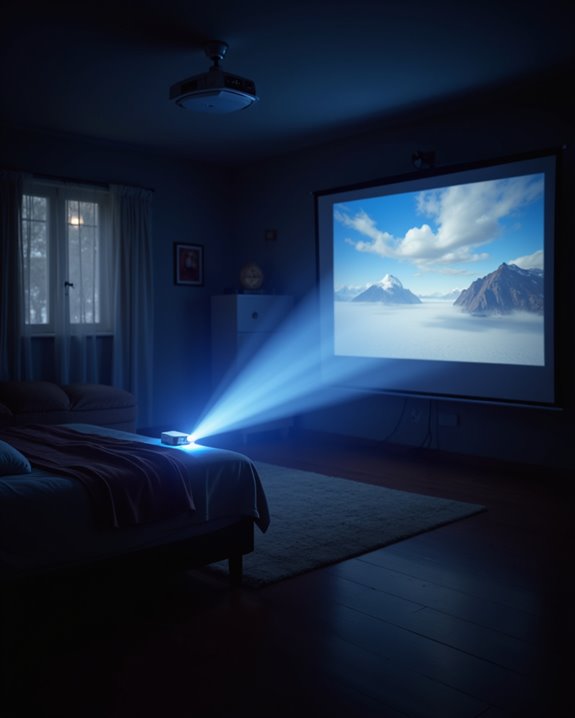
In well-lit rooms or spaces with sunlight, image quality from a projector can suffer due to limitations in brightness and the effects of ambient light—meaning any light in the environment apart from the projector itself. Ambient light can wash out projected images, making them appear faded or unclear. Brightness limitations are defined by a projector’s ANSI lumens rating, which measures how much visible light it can produce. For example:
- Bright rooms often need projectors with over 3,000 lumens to maintain clarity.
- Large screens require even more lumens to counteract ambient light.
- Office lighting (400–500 lumens) and sunlight (up to 100,000 lumens) create vastly different challenges.
Selecting a projector with appropriate brightness, using special screens, and controlling ambient light are critical for ideal performance. When choosing a projector, it’s important to remember that higher lumens are essential in well-lit or large-scale environments to ensure the projected image remains clear and visible.
Recommended Products

[Hear the Difference–Hollywood-Grade Dual 60W Dolby Audio] Why spend more on a TV + soundbar or settle for a tinny projector speaker when the ONO5Pro 2.0 movie projector delivers big-screen visuals and theater sound in one? 1)Dual 60W Dolby Audio-Tuned by Hollywood experts (800+ hours) for 200% louder, clearer sound than other 4K projectors. 2)With exclusive AI Sound Master tech, it automatically removes echoes and boosts bass for punchy explosions and crisp dialogue. 3)Room-Filling Sound covers up to 540 sq.ft–No extra speakers needed. 4)The innovative diaphragm design delivers a perfectly balanced highs/mids/bass audio profile. One tap to unlock a true theater-like sound experience

[Stream Without Limits - Built-in APPs, Compatible with Netflix] The ONO3Pro 2.0 outdoor projector brings the world’s top streaming platforms to your fingertips—no extra devices needed. Compatible with Netflix, YouTube, Prime Video, Apple TV, Disney+, Live TV, and over 1.2 million videos in stunning clarity. With regular updates, your movie projector stays ahead with the latest features, enhanced security, and uninterrupted stability—so your entertainment is always fresh, legal, and buffer-free, wherever you go

High Brightness Laser Projector: Deliver crisp text and vibrant images with WXGA (1280x800p) resolution and a 1.2-1.5 throw ratio; utilizing a long-lasting laser light source for reliable performance in professional office settings
Audio and Maintenance Challenges
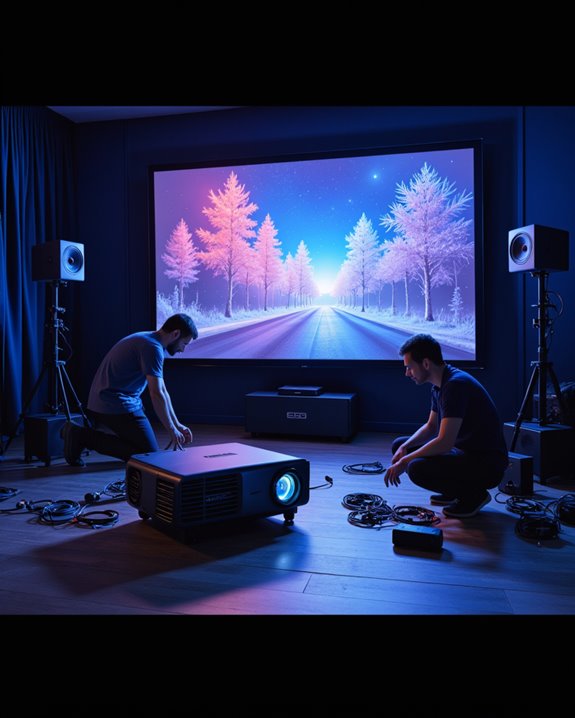
Although projectors offer large, clear visuals, their audio capabilities and maintenance requirements present notable challenges. Sound quality from built-in projector speakers is often limited, producing low to moderate volume with minimal bass and clarity. This makes them less effective in large or noisy rooms. Audio delays and sync issues can occur, especially with wireless connections or poor cable quality. Many projectors, especially older models, lack built-in speakers, requiring external audio devices to achieve adequate sound.
Maintenance is also critical. Dust impact is significant: dust buildup in vents or on audio components can muffle sound and cause overheating, reducing both audio and device performance. To maintain clear sound quality and *ideal* operation, regular maintenance is needed. Key practices include:
- Cleaning vents and fans with compressed air
- Replacing air filters as recommended
- Ensuring proper ventilation
- Checking all audio connections frequently
Recommended Products

[ Native 1080P & Eye Protection ] FUDONI outdoor projector has real native 1920*1080 resolution (4K Decoding), 18000 lumen brightness, 18000:1 high contrast ratio, and the latest color reproduction technology, which ensures bring clear, bright, and fantastic images for the home theater pleasure. The home theater projector also adopts a high-refraction 6 layers glassed lens and diffuse reflection eye-caring light source, ensuring protect the eyes while providing vivid images. This 1080p projector is perfect for creating a stunning home theater or bedroom projector setup

Real-Time 3D Conversion: Converts any 2D content — movies, TV shows, TikTok, YouTube, Bilibili, and other streaming apps — into stunning 3D visuals instantly.
Versatility and Use Cases in Different Settings
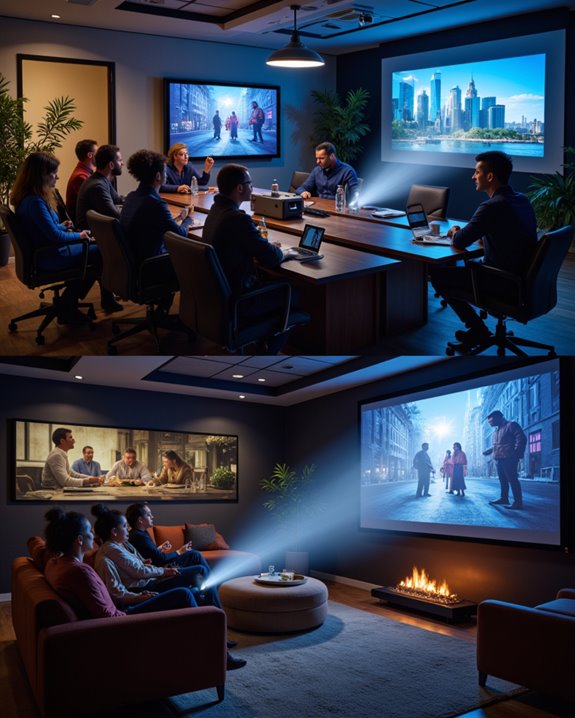
Beyond the routine care and audio considerations, projectors are valued for their remarkable versatility across different settings. Projectors adapt easily to various environments because of their portability, compatibility with multiple devices, and ability to handle different aspect ratios like 4:3 and 16:9. In office or classroom spaces, projectors support interactive displays, which allow for touch-based or stylus-controlled presentations. Key creative applications include large-screen gaming, home cinema, and even projecting art or decor onto walls. Notable technical features include:
- 4K resolution for crisp visuals
- HDR (High Dynamic Range) for improved color and contrast
- Short-throw lenses for small spaces
- Split-screen gaming support
Projectors’ adaptability makes them suitable for educational, entertainment, and professional uses, providing flexibility not found in traditional display screens. The choice of projector resolution is crucial, as it directly influences image clarity, detail, and the overall viewing experience in these varied applications.
Frequently Asked Questions
How Long Do Projector Bulbs Typically Last Before Needing Replacement?
Bright bulb longevity varies: standard lamps last 1,500–4,000 hours, while LEDs and lasers boast 20,000–50,000 hours or more. Replacement frequency depends on technology, usage patterns, and maintenance, with frequent cleaning essential for extending overall projector bulb life.
Are Projectors Compatible With Streaming Devices Like Roku or Chromecast?
Streaming compatibility is generally strong, as most projectors with HDMI support device integration for Roku and Chromecast. Wireless connectivity and port variations may affect setup, but adapters and built-in features increasingly simplify connecting popular streaming devices to projectors.
Can Projectors Display 4K or Ultra-High-Definition Content Effectively?
Modern projectors can display 4K resolution content effectively, offering enhanced image clarity and detail, especially on large screens. When paired with native 4K sources, they deliver immersive visuals suitable for home theaters, presentations, and cinematic experiences.
What Are the Energy Consumption Differences Between Projectors and TVS?
Energy efficiency varies: projectors typically have higher power consumption than TVs for similar screen sizes, though LED projectors improve efficiency. TVs generally use less energy, but usage patterns and features like eco-mode in projectors can influence overall consumption.
How Noisy Are Projectors During Operation Compared to Other Devices?
Noise levels of projectors during operation resemble the gentle hum of a refrigerator—noticeable but generally unobtrusive. Most projectors prioritize operational quietness, with home theater models operating at 25–35 dB, blending into typical indoor background noise.