As an Amazon Associate, we earn from qualifying purchases. Some links on this site are affiliate links at no extra cost to you. Our recommendations are based on thorough research and editorial judgment.

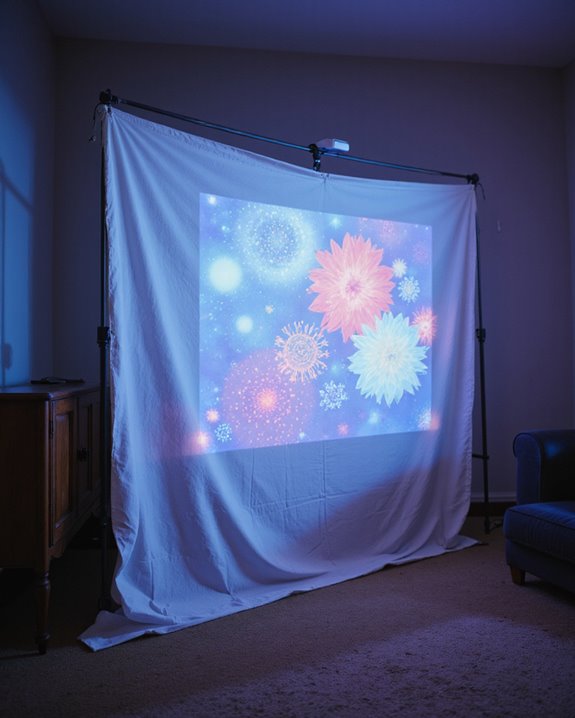
Can You Use a Sheet as a Projector Screen?

A plain white sheet can be used as a projector screen, offering an affordable and portable alternative to dedicated screens. Image quality with a sheet is limited—wrinkles, seams, and thin fabric may lower contrast and brightness, while colors can appear less accurate. Sheets lack the specialized coatings found on projector screens, resulting in less vivid images. For better results, use a clean, high thread count sheet stretched tightly. Alternative DIY options and simple setup improvements can further enhance viewing quality.
Key Takeaways
- Yes, you can use a white sheet as a projector screen for casual or temporary viewing.
- Sheets are affordable and easy to set up but often produce lower image quality than dedicated projector screens.
- Wrinkles, seams, and fabric texture can cause uneven lighting, hotspots, and diminished color accuracy.
- For best results, use a clean, high thread count white sheet hung as flat and taut as possible.
- Alternative DIY surfaces like blackout cloth, foam board, or painted walls offer improved brightness and clarity.
Affordability and Versatility of Using Sheets
You may be interested

When considering alternatives to dedicated projector screens, many people wonder whether using a simple sheet is a practical and cost-effective choice. Sheets are generally affordable, requiring no special mounting equipment, which keeps initial expenses low—ideal for short-term or casual projections. Their lightweight material makes them portable and easy to set up, supporting adaptability across different environments, including outdoor and temporary installations. Sheets also offer size variability and color customization, allowing users to select dimensions and colors suited to their needs. However, material durability is a concern; sheets are not designed for frequent use and may show wear over time. Additionally, sheets can be repurposed for other uses, increasing their overall value. Compared to painting a wall, sheets provide flexibility at a lower cost. Furthermore, choosing the right projection surface can significantly improve image quality and reduce issues like washout or glare.
Image Quality: What to Expect
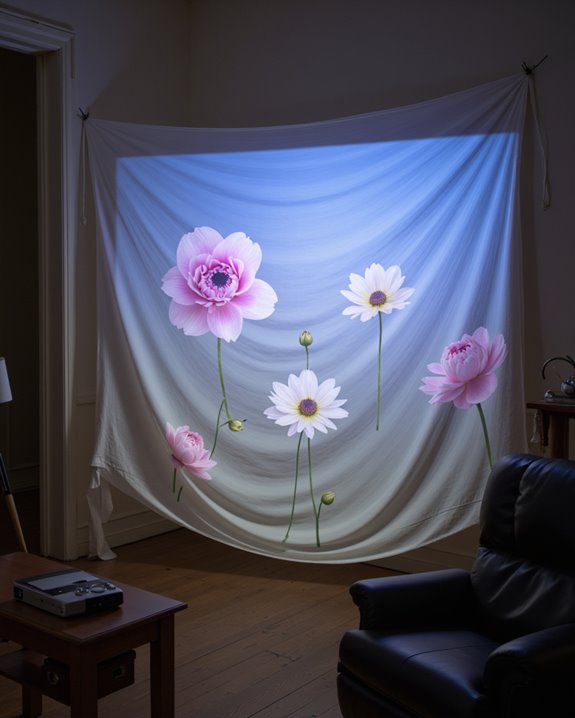
How does using a sheet as a projector screen affect image quality? Sheets typically have a gain—meaning the amount of light reflected—close to 1.0, which results in moderate brightness and contrast. Unlike specialized screens, a sheet lacks strong surface uniformity; wrinkles or creases scatter light unevenly, causing hotspots or dull spots in the image. Color fidelity, defined as the accurate reproduction of colors, may be compromised due to fabric tints or inconsistent dye, leading to colors that look less vibrant or slightly altered. Additional factors include:
- Sheets do not absorb ambient light well, often resulting in glare or washed-out images.
- Contrast and black level are generally lower because sheets lack light-absorbing properties.
- Off-center viewing can reveal brightness and color shifts, further decreasing image quality.
- The surface material of a sheet can influence image reflection and overall picture clarity.
Recommended Products

Movie Screen Fabric: Made from white, soft-touch material, our thickened, smooth projector screen is crease-free and nontransparent, delivering brighter colors. It uses washable materials and can be washed either by hand or in a washing machine. Quality is strictly controlled, making it ideal for outdoor projector use.

Excellent display effect: The projection screen has a high reflectivity, which can present a high definition and saturated picture, making the projection effect more excellent.

CONVENIENT TO STORAGE AND CARRY : Compact one-piece,lightweight and folding design. You can fold the projector screen in small size and put it in your backpack or suitcase
Setting Up a Sheet for Projection
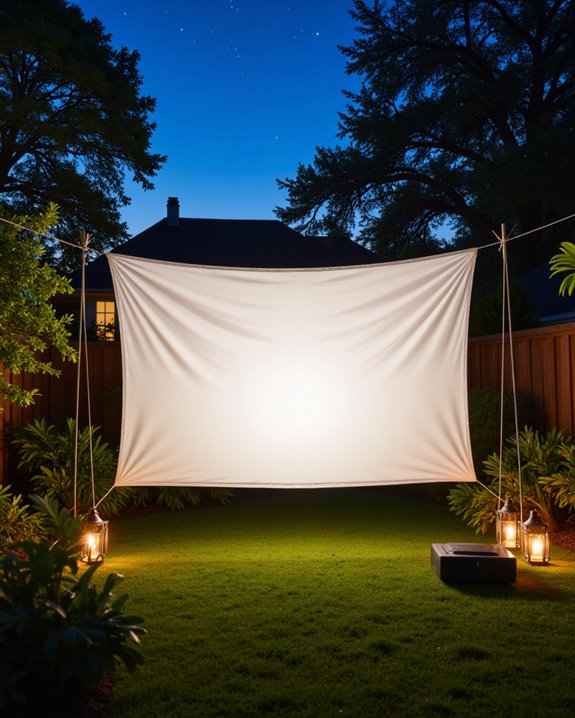
Successfully setting up a sheet as a projector screen requires careful preparation and attention to detail to achieve the clearest possible image. First, select a white bedsheet with a high thread count, as this offers a smoother projection surface. Clean the sheet thoroughly using gentle cleaning methods—wash and iron it to remove dust, stains, and wrinkles. Wrinkles distort the image, so ironing is critical. Reinforce the sheet’s edges with grommets or strong tape to enhance material durability and prevent tearing. For secure hanging, use hooks, clips, or bungee cords, making sure the sheet is stretched tautly and hangs straight. Choose a location free from direct sunlight, and ensure the background is neutral and flat for ideal image quality. Regular inspection and careful storage maintain long-term use. Additionally, selecting a proper projection surface can significantly improve image brightness and contrast.
Recommended Products

Application: Fits most manual or spectrum projector screen on the market. Support maximum loading weight up to 66lbs / 30kg

Application: Fits most manual or spectrum projector screen on the market. Support maximum loading weight up to 66lbs / 30kg
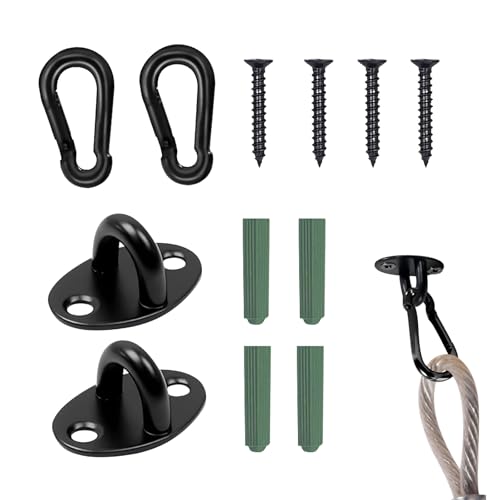
Durable and Rust-Resistant Build: Each eye plate is made from quality stainless steel and measures 1.54 x 1.02 inches. This ceiling mount hook is designed to be rustproof and well-constructed for long-term indoor and outdoor use
Comparing Sheets to Dedicated Projector Screens
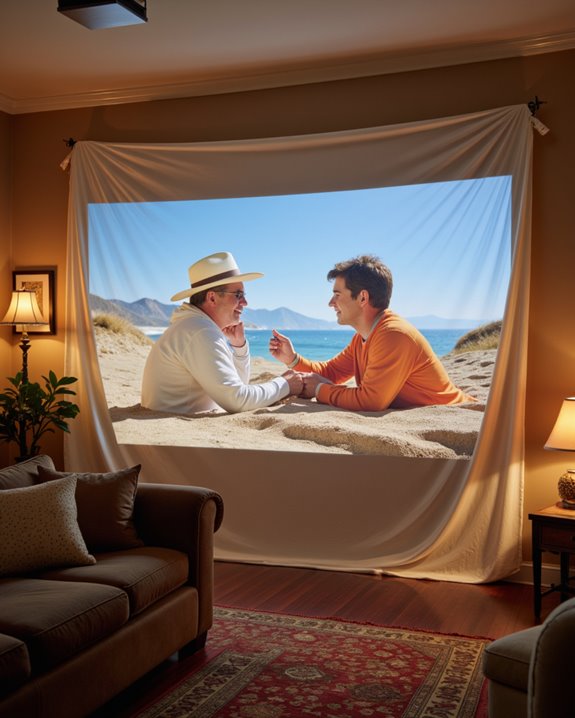
A sheet can work as a quick projection surface, but it cannot match the performance of a dedicated projector screen. Projector screens are made with specialized materials that ensure color consistency and sharper images. Sheets, on the other hand, often have wrinkles or seams that scatter light and reduce image clarity. This results in washed-out colors and poor contrast. Material durability also differs greatly—screens use tensioned, coated fabrics that resist stretching, sagging, or staining, while sheets degrade quickly and can wrinkle or absorb moisture. Key differences include:
- Projector screens have reflective coatings for better brightness.
- Screens maintain color consistency by rejecting ambient light.
- Sheets are flexible for quick setups but lack long-term durability.
Recommended Products

This economical and practical polyester textile material is suitable for DIY production of wooden fixed-frame projection screens below 130 inches in size. Just stretch and fix it on all four sides.

This is a new type of multi-layer composite EPPE ploymer projection screen fabric, which is different from conventional PVC, glass fiber, white plastic and canvas. The material is environmentally friendly and meet EU REACH testing standards

★【Better Contrast and Color】 Light bleed is eliminated by the black backing layer, significantly improving image quality.
Exploring Alternative DIY Projection Surfaces
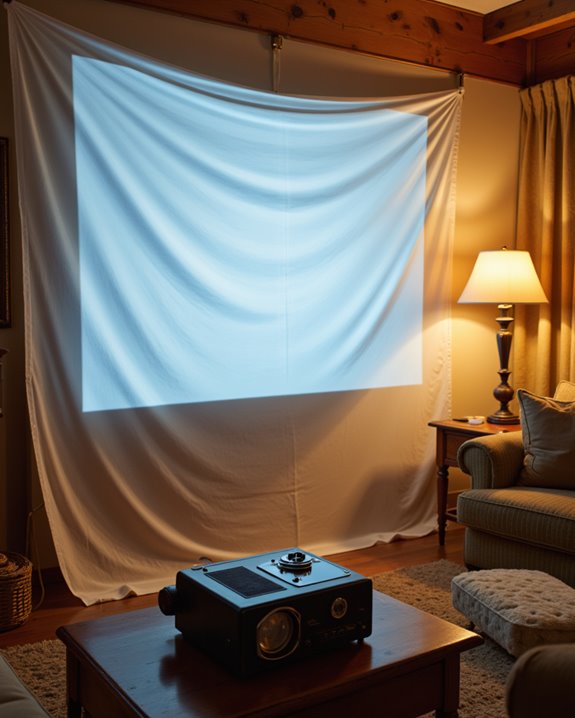
While a bed sheet offers a quick solution for projecting images, several alternative DIY surfaces provide better image quality and durability. Foam boards, with their flat, smooth surface texture, are ideal for clear images and can be joined for custom sizes. Covering them with reflective fabric increases brightness. White tarps, stretched tightly over frames, deliver strong material durability and are effective for large projections. PVC pipe frames, combined with taut fabric or tarps, form lightweight, portable screens, with bungee cords or zip ties keeping surfaces wrinkle-free. Blackout fabric, designed to block light, features a smooth surface and prevents light bleed, making it popular for budget projects. Painted walls, using matte or projector-specific paint, offer a permanent, wrinkle-free surface optimized for light reflection and image clarity.
Recommended Products
This is an economical and practical polyester textile material, suitable for DIY production of wooden fixed frame projection screens below 120 inches in size。Stretched and fixed on all four sides.
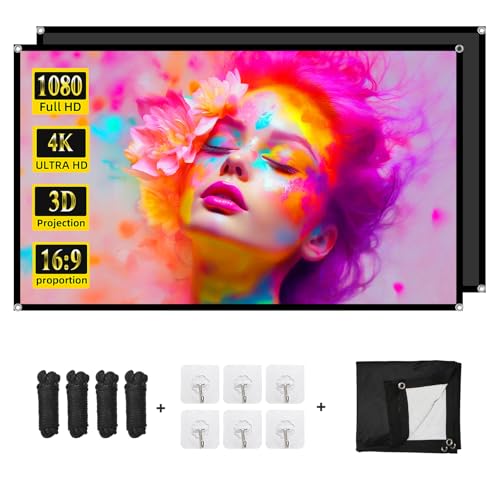
【Projector Screen Black Backing 】Blackout projector screen it is black and white,The front is white and the back is black,Light cannot penetrate projection screens compared to other double-sided white fabrics.enhancing image sharpness and authenticity. It means I can fully focus on the movie or media content without distractions from background light
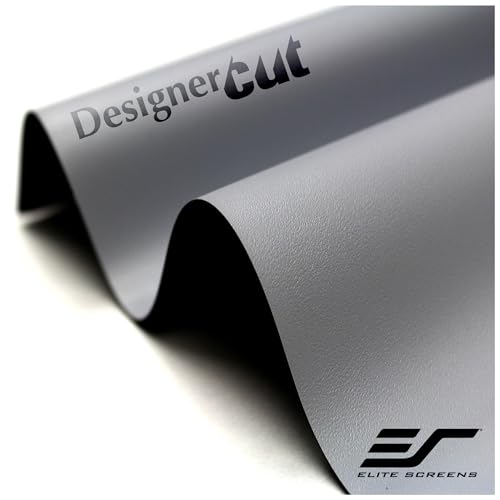
135-inch Diagonal, 16: 9 Aspect Ratio. View Size: 70" H x 124" W (**Not Compatible Triple Laser Projectors**)
Environmental Factors Affecting Performance
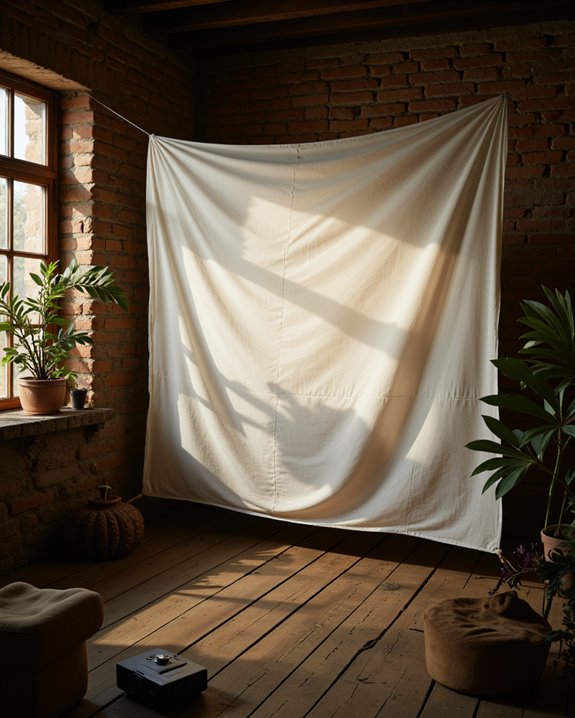
How do environmental factors influence the performance of a bed sheet used as a projector screen? Light pollution—unwanted or excessive ambient light—directly reduces image contrast and brightness, making projections on a sheet appear faded or washed out. Surface durability is also a concern, as sheets exposed to outdoor elements like wind, moisture, and sunlight may stretch, shrink, or degrade quickly, leading to a shorter lifespan and more frequent replacement. Additional issues include:
- Wrinkles and creases scatter projected light, causing blurry or uneven images.
- Low-gain (inefficient light-reflecting) surfaces, such as most sheets, perform poorly in bright rooms or outdoor environments.
- Dust and dirt from environmental exposure further distort images over time.
These factors make sheets less reliable than purpose-built projector screens in uncontrolled settings.
Tips for Optimizing Your Sheet-Based Projection Setup
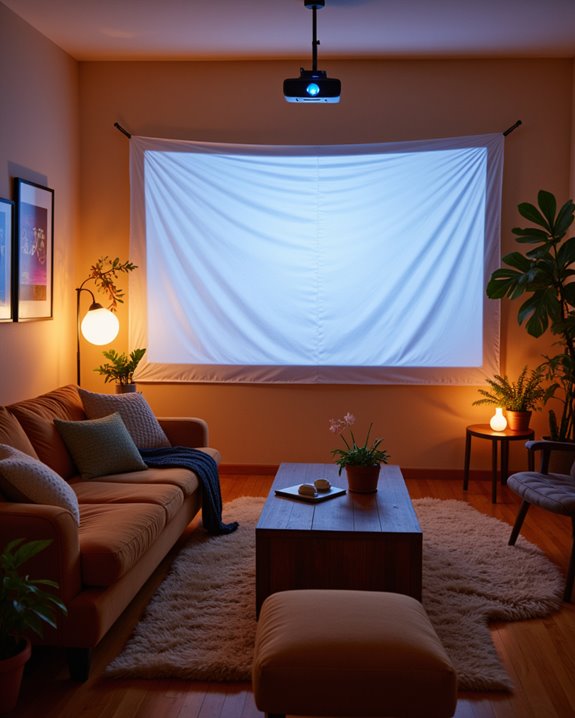
Selecting the right sheet and preparing it properly are essential steps to achieve a usable projector screen at home or outdoors. Start by choosing a white, high-thread-count bedsheet, as it best reflects light and reduces color distortion. Remove patterns or logos, and wash and iron the sheet to ensure a smooth, clean surface. To optimize projector compatibility—how well the projector works with the sheet—hang the sheet taut using grommets, hooks, or bungee cords, securing both top and bottom to minimize sagging. Mount the sheet on a flat wall or frame for even projection. Adjust projector positioning by aligning the lens with the sheet’s center and using a stable base. Control lighting conditions by avoiding direct light behind the sheet, preventing see-through effects and image washout.
Recommended Products

100% Wrinkle Free Material - The 100 inch projector screen used soft touch and stretchy thick polyester fiber material to ensure maximum wrinkle free, providing clearer images, brighter colors and no color cast. Please be assured that all of our movie screen will undergo rigorous quality inspection process before sending out, so there will be no any spots on the screen to affect the viewing experience. NOTE: Please note the SIZE before you purchase!

Wrinkle Free Material - The 72 inch projector screen used soft touch and stretchy thick polyester fiber material to ensure wrinkle free after folded or compressed, providing clearer images, brighter colors and no color cast. Please be assured that all of our outdoor movie screen will undergo rigorous quality inspection process before sending out, so there will be no any spots on the screen to affect the viewing experience and is thick enough that you can't see what's behind it.

Movie Screen Fabric: Made from white, soft-touch material, our thickened, smooth projector screen is crease-free and nontransparent, delivering brighter colors. It uses washable materials and can be washed either by hand or in a washing machine. Quality is strictly controlled, making it ideal for outdoor projector use.
Frequently Asked Questions
Can You Use Colored Sheets for Projector Screens, or Must They Be White?
When considering colored sheets versus white sheets, colored sheets generally absorb more light, causing dimmer, less accurate images. White sheets reflect light better, resulting in brighter projections and truer colors, making them preferable for projector screen use.
Are Certain Sheet Materials Better for Projection Than Others?
When evaluating sheet materials, the suspense lies in two key factors: fabric texture and light reflectivity. Ultimately, a matte white cotton or polyester sheet, with minimal texture and high reflectivity, consistently delivers superior projection clarity and brightness.
Is It Safe to Use an Iron or Steamer to Remove Wrinkles From Sheets?
Removing wrinkles from sheets with an iron or steamer is generally safe when fabric safety guidelines are followed. Ironing tips include using correct temperature settings, testing inconspicuous areas, and keeping devices moving to avoid burns or fabric damage.
Can You Project 3D Movies Onto a Sheet Screen?
Like casting shadows on fog, projecting 3D movies onto a sheet is possible but limited by projector compatibility and sheet size options. Lacking reflective properties, sheets often yield dim, low-contrast 3D images compared to dedicated screens.
How Do You Securely Hang a Sheet Without Damaging Walls or Ceilings?
To securely hang a sheet without damaging walls or ceilings, one might use adhesive hooks or tension rods. These methods avoid holes, preserve surfaces, and allow easy removal, making them suitable for temporary or rental spaces.