As an Amazon Associate, we earn from qualifying purchases. Some links on this site are affiliate links at no extra cost to you. Our recommendations are based on thorough research and editorial judgment.

Did They Have Projectors in 1899? A Look at Early Projection

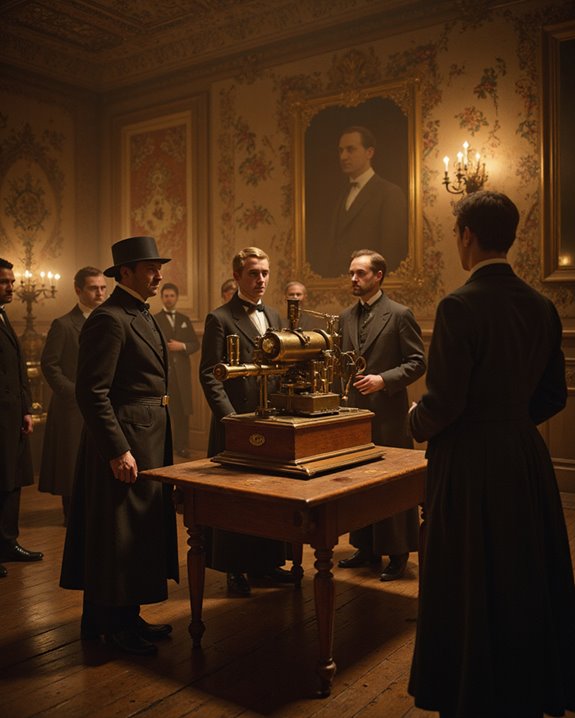
Yes, projectors existed in 1899, most especially devices like magic lanterns and the Cinématographe. Magic lanterns used painted glass slides and light sources (candles, limelight) to project images, while early film projectors displayed silent movies using mechanical systems and 35mm film. These early devices had no digital features, relied on perforated film for smoother movement, and were built for group viewing in theaters. Innovations from this era shaped later projection technology; further details show their wider impact and evolution.
Key Takeaways
- Projectors did exist in 1899, primarily using mechanical and optical systems for displaying silent films and magic lantern slides.
- Early projectors used light sources like limelight or carbon arc lamps and lacked digital or electronic features.
- The Lumière brothers’ Cinématographe (1895) and similar devices enabled public screenings of moving images before 1900.
- These projectors played a major role in the rise of early movie theaters and group entertainment.
- While foundational, 1899 projectors were limited in image quality and functionality compared to modern digital systems.
The Origins of Projection Devices
You may be interested
The origins of projection devices trace back to a period of rapid scientific and technological advancement in the late 19th century. Early projectors made it possible to display silent films—movies without recorded sound—by using innovative projection mechanics. These mechanics included the use of light sources, lenses, mirrors, and moving film strips to cast images onto screens. Key developments included:
- Eadweard Muybridge’s Zoopraxiscope (1879), which displayed moving images using glass slides.
- Louis Le Prince’s 16-lens device (1886), combining camera and projector functions.
- The Lumière Brothers’ Cinématographe (1895), integrating camera, projector, and film processing.
Advancements in optics and illumination, such as electric lamps, improved image quality and projection distance. By 1899, projectors were capable of showing motion pictures in public venues.
Recommended Products
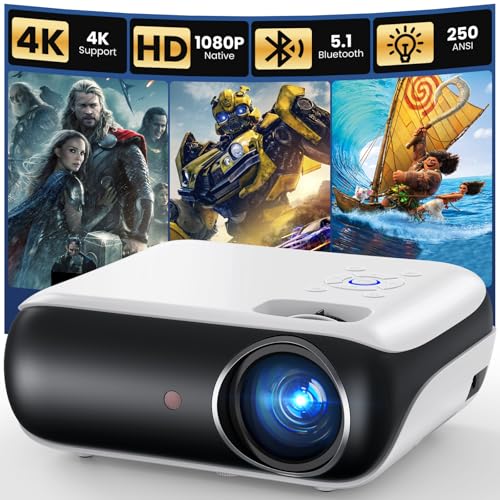
[ Native 1080P Full HD Resolution ] - Enjoy crystal-clear visuals with HAPPRUN H1's native 1920x1080 resolution, delivering sharper, brighter, and more vibrant images for an immersive viewing experience. This 1080p projector is perfect for creating a stunning home theater or bedroom projector setup

【The Latest WIFI 6 Technology And Bluetooth 5.3】This projector with Wi-Fi and Bluetooth is equipped with the latest Wi-Fi 6 technology, compatible with Wi-Fi 6, 5G and 2.4G, offering faster connection speed and stronger stability, eliminating buffering and disconnection issues, and ensuring smoother online content playback. Additionally, it is fitted with the latest Bluetooth 5.3 chip, allowing for easy connection to Bluetooth speakers, headphones or other Bluetooth audio devices, providing a more efficient and stable transmission channel, and enabling users to enjoy higher audio quality with ease
Magic Lanterns and Pre-Film Innovations
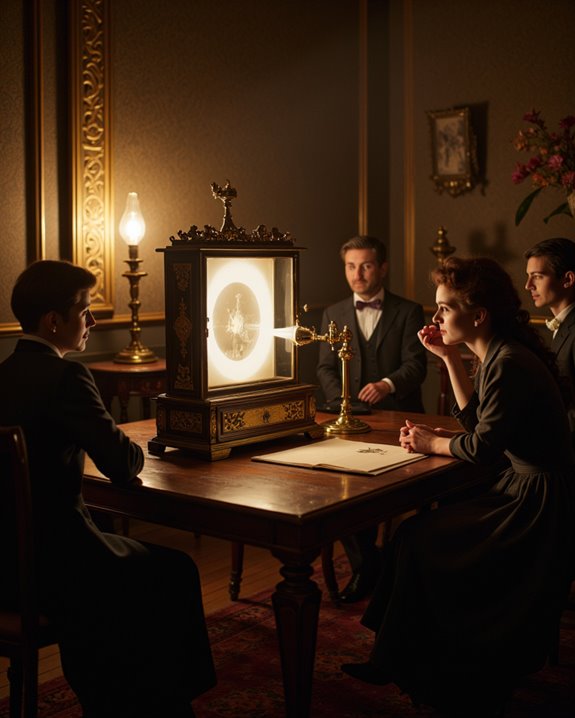
Before the rise of motion picture projectors at the end of the 19th century, magic lanterns stood as the primary technology for image projection. A magic lantern is an optical projector that uses painted or printed glass slides and a light source to display images on a wall or screen. Color enhancement was achieved by hand-tinting slides, adding visual appeal to educational lectures and entertainment shows. Light sources evolved from candles and single wick burners to kerosene lamps, limelight, and eventually carbon arc lights, delivering brighter, clearer images. Slide automation, involving mechanical devices to advance slides or create movement, introduced early animation effects. By 1899, manufacturers like Planck were producing up to 150,000 units yearly, demonstrating the global popularity and commercial success of magic lanterns. The use of high-brightness light sources and projection technology contributed significantly to the effectiveness of these devices in larger venues.
Recommended Products

Lens not included with projector

PACKAGE LIST: You will get one skeleton water snow globe lantern with timer, one user manual, one USB to DC cable Product dimension is 4.3”x4.3”x11”. Included USB cable allows you operate the snow globe lantern without batteries. You can also operate it with 3 AA batteries(not included)

PACKING LIST & WARRANTY: Ainael Galaxy Projector Disc Set includes 6 stunning slides featuring: Saturn, Black Hole, Moon Story, Gibbous Moon, Arctic Stars, Starry Antarctic. We stand behind our quality — enjoy peace of mind with our one-year replacement guarantee. If you have questions, our friendly support team is always here to help. (Note: Projector not included.)
Key Figures in Early Projection Technology
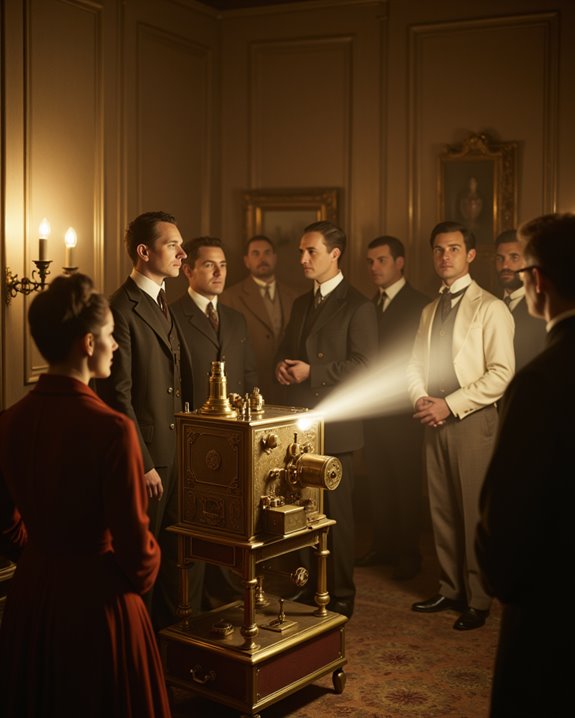
Several inventors and engineers played crucial roles in the early development of projection technology at the end of the 19th century. Charles Francis Jenkins, for example, created a machine that projected silent films by illuminating each frame for smoother viewing, making projector maintenance more manageable. The Lumière brothers introduced the Cinematographe, a device that combined camera, projector, and film development, making motion picture projection portable and efficient. Thomas Edison’s team, with William K.L. Dickson, shifted from individual Kinetoscope viewers to commercial large-screen projectors, further popularizing silent films. Joshua Lionel Cowen improved projection lighting with his flash-lamp, enhancing image brightness and clarity. Wilhelm Conrad Röntgen’s discovery of X-ray projection highlighted new imaging techniques, illustrating how projection technology was rapidly evolving in this era. The development of accurate projection systems with higher luminosity and precision set the stage for modern cinematic displays.
Breakthroughs in Film Materials and Mechanics
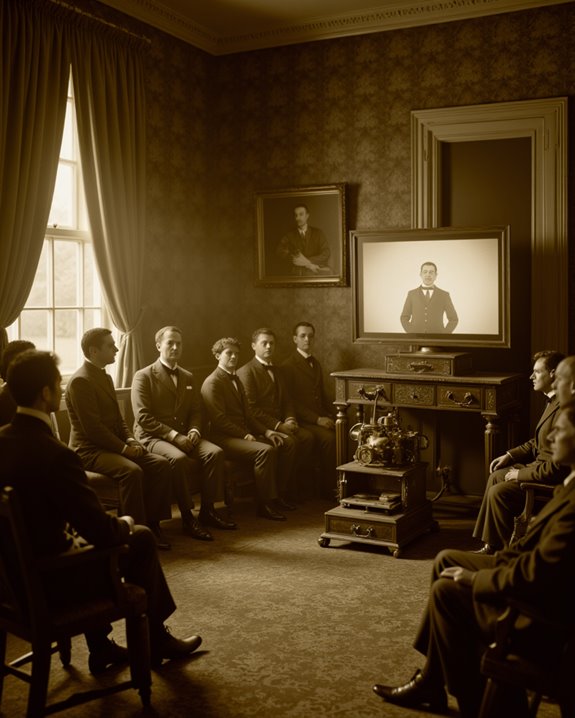
Although early projection technology relied on basic materials and simple mechanics, breakthroughs in film materials and device engineering during the late 1800s fundamentally changed motion picture projection. The introduction of perforated film—film with evenly spaced holes along the edges—enabled smoother, more reliable movement through projectors. Standardization of 35mm film stock, a flexible strip coated with light-sensitive chemicals, became widely adopted after use in Edison’s Kinetoscope. This format allowed for consistent projection speed, which is the rate at which film frames pass through a projector, enhancing the illusion of motion. Additional advances included the development of safer, less bulky film materials and narrower gauges like 9.5mm. Mechanical improvements—such as open-reel systems and effective shutter blades—reduced flicker and improved image clarity for viewers. These technical innovations laid the groundwork for the modern projection systems used today.
Recommended Products
3 pack Kodak Ultra Max 400 Color print film 36 exp. 35mm DX 400 135-36 (108 pics)

SAVE OLD PHOTO MEMORIES: 1422MP Digital Film Scanner Lets You View, Edit and Convert Your Old Color and BandW Negatives 135, 110, 126mm and 50mm Slides 135, 110, 126mm to Digital Files and Save Directly to SD Card (NOT INCLUDED)

3X MAGINIFICATION GLASS SCREEN: Most slides and films are ultra-small, our Built-in Magnifier can magnify the image 3 times without Distortion, Blurriness or Loss of details, also Bright and Uniform Lighting, no color cast.
The Shift From Individual Viewing to Public Screenings
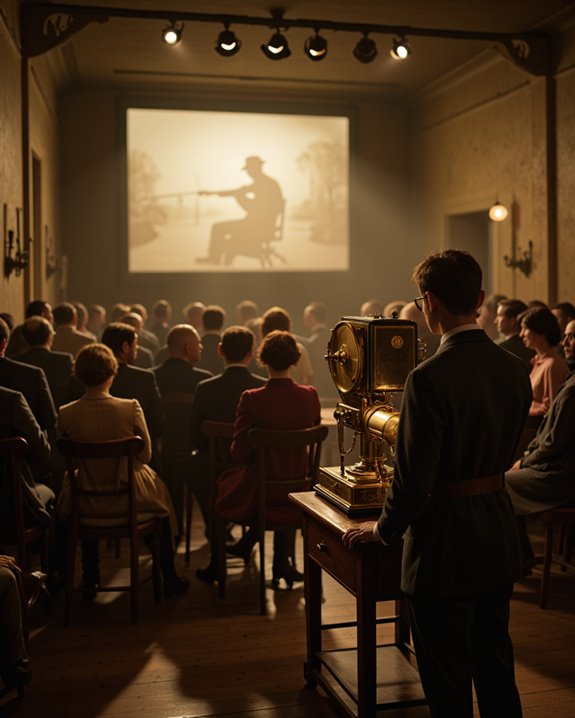
Breakthroughs in film materials and mechanics paved the way for a new era in how motion pictures were experienced. The late 1890s saw a significant cultural shift as cinema moved from individual viewing devices to shared public screenings. Devices like the Lumière brothers’ Cinématographe and Edison’s Vitascope were central to this transformation, projecting moving images onto makeshift screens for groups to watch together. Audience engagement increased as people gathered in closed rooms to view films, marking the beginning of communal cinema experiences. This change democratized entertainment, making films accessible beyond private parlors. The rise of early theaters, storefront venues, and eventually Nickelodeons (five-cent theaters) fostered a new social space. Public screenings quickly became a cultural phenomenon, influencing popular culture and accelerating the growth of the film industry.
Landmark Projection Systems of the 1890s
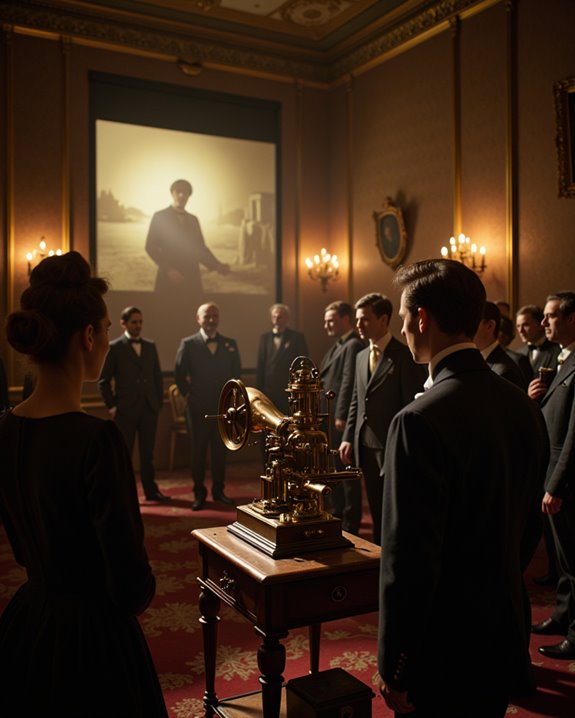
How did motion pictures shift from private curiosities to public spectacles in the 1890s? Key inventions such as the Cinematograph, Eidoloscope, and Vitascope enabled the projection of silent films onto screens, transforming the viewing experience. The Kinetoscope, though not a projector, introduced perforated film, which allowed smoother film movement and set the stage for future systems. Landmark devices included:
- Cinematograph (Leon Bouly, 1892): Early projector for public screenings.
- Eidoloscope (Woodville Latham): Demonstrated in 1895, advanced projection quality.
- Biograph: Used larger, non-perforated film for sharper images.
Innovations like intermittent movement improved reliability and image clarity. These projection systems replaced individual peephole viewers, enabling widespread public acceptance and global expansion of silent films, and greatly enhanced projection quality for audiences across regions.
Recommended Products

Vintage Movie Film Projector Model: Made from resin material, this projector model is not only beautiful but also highly wear resistant. Its sturdy construction ensures long-lasting use, making it a retro addition to your home decor collection

♬ 【Unique Style】:Delight with Reminiscence, Classical Movie Projector. The surface of the music box is exquisite and the sound is clear and pleasant.

Awesome shirt that feature a vintage retro blueprint design of a MOVIE PROJECTOR. If you love going to see films, movie, theater or cinema, then this is the tee for you! Great Christmas or birthday gift for movie lover, film lover, or projectionist.
Social and Economic Effects of Early Projectors
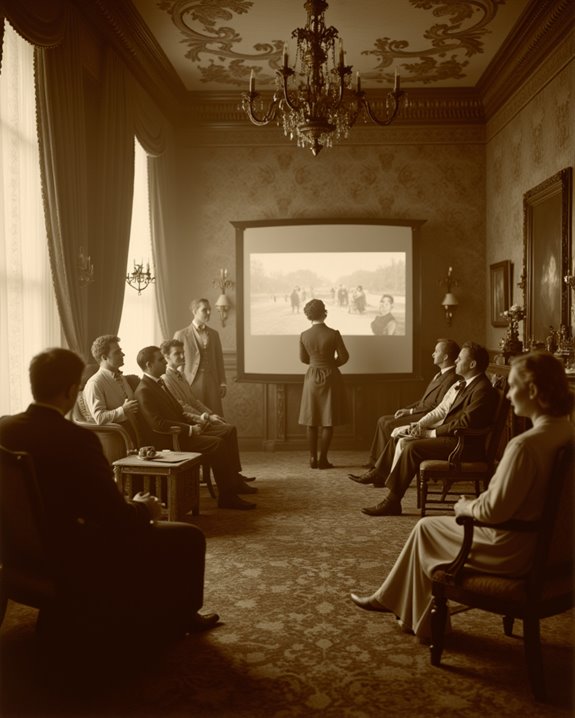
As early projectors appeared in the 1890s, they quickly reshaped both social life and economic activity by making motion pictures a shared, public experience. This technological innovation fueled the rise of cinema, transforming entertainment into a collective event. Theaters and other venues adapted to accommodate projectors, creating new business opportunities and job roles. Early projectors also drove market expansion, with films distributed to wider audiences. Their introduction fostered competition and further technological innovation among inventors.
The cultural influence of projectors was significant:
- They enabled cultural exchange by displaying films from different regions.
- Public gatherings around projected images increased social interaction.
- Projectors supported educational uses, spreading information visually.
This combination of novelty, economic growth, and cultural influence solidified early projection’s impact across society.
Evolution Toward Modern Projection Technology
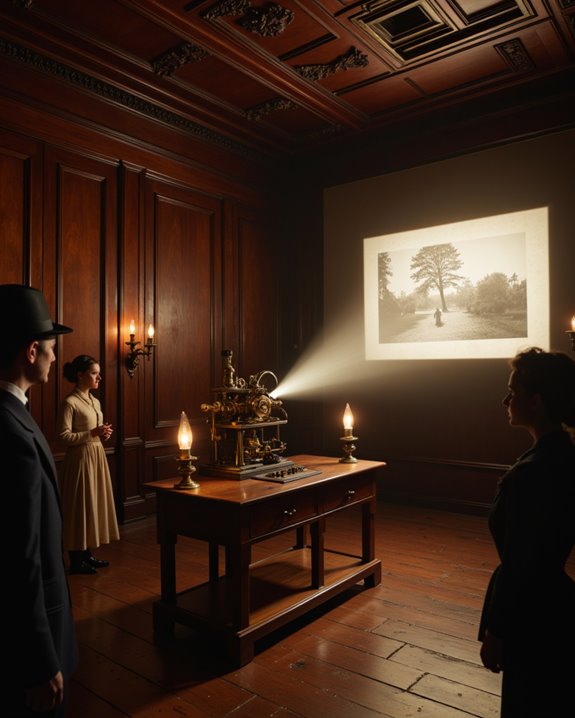
While projection technology began with simple devices like the magic lantern, it has evolved into highly advanced systems that define modern visual experiences. Today, projectors feature digital connectivity, which means they can link to computers, smartphones, or networks for easy image sharing. Portable design is also a key development, as modern projectors are lightweight and easy to move. Advances include:
- Laser projectors, offering high brightness and long lifespan
- LED projectors, known for energy efficiency
- High-definition displays, supporting sharp, detailed visuals
- Smart projectors, with app integration and wireless options
The shift to digital projection panels in the 1980s allowed for direct connection to computers. These changes make projection accessible in classrooms, offices, and homes, transforming how audiences experience media and information.
Recommended Products
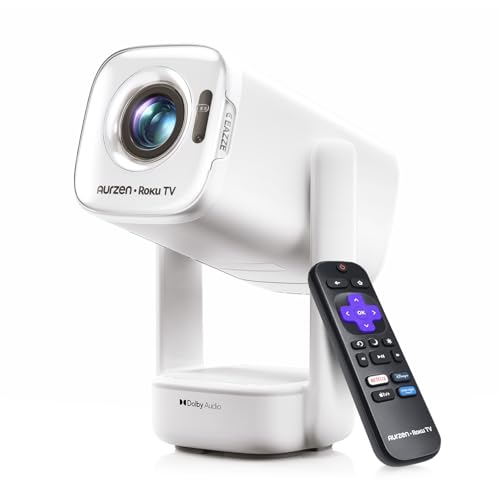
A Roku account and internet connection are required for activation (Creating an account is free)

A Roku account and internet connection are required for activation (Creating an account is free). Note: Power Supply: 100-240V AC, 50/60Hz.

【Built-in WiFi & Bluetooth Projector with Apps】Dual-band WiFi 2.4G + 5G ensures fast and stable wireless streaming. Bluetooth 5.2 supports speakers and headphones. Built-in apps like YouTube and Prime Video are supported, and the projector is compatible with TV sticks (not included) to access a wide range of streaming content and enjoy massive video libraries, making it a perfect movie projector.
Frequently Asked Questions
How Much Did Early Projectors Cost in the 1890S?
Historical costs of early projection technology in the 1890s are difficult to pinpoint, but projectors were considered expensive investments. Pricing likely limited ownership to commercial exhibitors, as projection technology targeted businesses rather than individual consumers during this formative period.
Were Projectors Used for Educational Purposes in 1899?
While silent films flickered in theaters, classrooms remained largely untouched by educational technology in 1899. Projectors, though recognized for their potential, were rare in schools, with magic lanterns occasionally used as visual aids but not widely adopted.
What Was the Typical Length of Films Shown on Early Projectors?
Typical film reel lengths displayed by early projection technology ranged from 15 seconds to one minute. These short durations reflected technological limitations of the era and the infancy of narrative filmmaking, with longer films emerging only in the early 1900s.
How Did Audiences React to Their First Projected Films?
Audiences at silent screenings experienced unprecedented excitement, often reacting with astonishment or even fear to the lifelike motion. Collective surprise, vocal responses, and applause marked these early encounters, as viewers navigated the novel sensory impact of projected moving images.
Were Color Films Possible With Projection Devices in 1899?
Color projection in 1899 was technically possible but faced significant technical limitations. Specialized equipment and complex filter alignment were required, making early color film processes impractical and commercially unviable. These attempts, however, influenced future advancements in color cinema technology.